

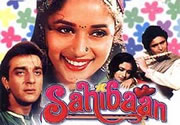
Sahibaan
Synopsis:
It lives a poor lifestyle in a small village in ancient India along with her mom, dad, Balakram, and a mentally challenged cousin, Kheru. Balakram makes a living selling dolls. It is in love with a homeless laborer, Gopi, who lives near Mandirs and eats whatever the villagers give him. One day while chasing a rabbit, It ends up in the palace ground of ruthless killer, alcoholic and womanizer Kunwar Vijay Pal Singh, is abducted by his guards and left at the mercy of Vijay, but It manages to escape. Vijay, however, is unable to get her out of his mind and asks Diwan Durga Singh to search high and low for her. The Diwan is able to find her during a Mela and takes several men, sweetmeats, jewelry and clothing to propose to a delighted and disbelieving Balakram and his wife. They are angered when It refuses to marry Vijay, and asks them to get her to marry Gopi. When Gopi proposes, he is humiliated, beaten and asked to leave. Diwan returns to Vijay, who decides to kill Gopi, locates him, beats him, and throws him in the river. When It tells that Vijay had attempted to molest her, Balakram refuses to permit her to marry Vijay, despite of the fact that Vijay promises to stop drinking alcohol and having his way with women. Both Balakram and It set out to try and locate Gopi. The question remains will they be able to locate Gopi in time?
There is a specific kind of squint Rishi Kapoor does right before he delivers a line that should have been rewritten by someone with an ear for cadence, and Sahibaan gives him plenty of chances to squint. It is a movie that sits in a weird drawer of the early nineties, wedged between the high-gloss melodramas that were starting to take over Hindi movies and the ragged, half-finished actioners that Sanjay Dutt kept wandering out of. Ramesh Talwar directs it with the kind of sleepy competence that suggests everyone on set was waiting for lunch, though occasionally the camera wakes up because someone tripped over a cable. If I'm honest, nobody involved seems entirely sure which folk tale they are actually updating, which gives the whole enterprise a loose, improvised feel that isn't charming so much as it is tiring. You can almost smell the dust on the rented Jeep that keeps driving through the same patch of Punjab twice in every reel, pretending it is on a desperate chase across the countryside.
Sanjay Dutt walks through this picture like he has somewhere else to be, which makes sense given his calendar at the time, but that distractedness accidentally gives his character a weird sort of modern weight. He doesn't look like a tragic romantic lead from a traditional story. He looks like a guy who just wants his tea and a quiet afternoon, which contrasts wildly with the operatic wailing happening around him. Dutt's voice sounds like it's been dragged across gravel for three days, and when he tries to register jealousy, his eyebrows barely move because he's clearly trying to remember if he left his headlights on. It is not a good performance by any academic metric, but it beats the alternative, which is Rishi Kapoor trying to sell pure theatrical earnestness while wearing a waistcoat that looks like a repurposed sofa cushion.
Madhuri Dixit is doing the heavy lifting here, and by heavy lifting I mean she is running through muddy fields in heavily embroidered lehengas while the sound department drops in the squelching sound effects a full second after her foot hits the dirt. It's a small thing, but that persistent audio lag bugged me through every single emotional confrontation. Dixit has this way of locking her eyes onto the lens and refusing to let go, anchoring scenes that would otherwise dissolve into sheer noise. She manages to make Sahibaan feel like a person rather than a prop, even when the script forces her to stand by a well and look mournful for stretches of time that test your patience. When she goes toe-to-toe with Kapoor in their second-act confrontation, she actually manages to make his absurd dialogue sound like real human speech, which is a magic trick I wouldn't have thought possible.
The supporting cast features Gulshan Grover chewing scenery with such enthusiasm you half expect him to start eating the trees, but the real distraction is an uncredited extra in the village council scenes who is so obviously dubbed by a voice actor thirty years his senior that every time he opens his mouth you lose the thread of the plot. He sounds like a tobacco-chewing grandfather trapped inside the body of a twenty-year-old stunt double. It is the kind of technical sloppiness that used to plague mid-tier Bollywood releases before anyone cared about sync sound, and it pulls you right out of the tragedy the film is trying so hard to construct. Ramesh Talwar lets these awkward takes linger three frames too long on reaction shots, turning what should have been tense dramatic beats into uncomfortable comedy.
Anand-Milind provide a score that recycles the exact same flute motif until it feels like a form of mild psychological torture. You hear those five notes every time someone looks toward the horizon, which happens every four minutes. It reminds me of how carelessly Rajiv Rai used to drop background tracks into Tridev, just hammering the same cue until the audience surrendered. Yet there is one song wedged into the middle of the second half where the rhythm section actually gets loose and Dixit does some footwork that makes you forget about the mediocre editing around her. The lyrics are completely forgettable, but the percussion has a punch that wakes up the theater speakers just enough to remind you that money was spent somewhere on this production.
The screenplay tries to graft a contemporary cynicism onto a classic folklore template, resulting in a narrative that keeps tripping over its own feet. Characters make decisions based on nothing more than the plot needing to get them to a specific courtyard by sunset, abandoning any internal logic they established five minutes prior. This isn't the grand, sweeping destiny of Heer Ranjha. It feels more like a hastily assembled television episode stretched out to two and a half hours because someone needed to fill a distributor's quota. The villains show up without any real motivation beyond needing someone to hold a rifle while the heroes exchange soulful glances across a bonfire.
There is a peculiar lack of urgency in how these conflicts are resolved, trailing off into a bunch of horse riding and shouting that feels entirely perfunctory. The final confrontation happens near a brick kiln with zero atmosphere, lacking the visual poetry that earlier Hindi films brought to their doomed-lovers climaxes. Dutt fires a couple of shots into the air, Kapoor says something about honor that nobody believes, and Dixit looks at the camera one last time with that familiar, tired brilliance. The screen fades to black without any fanfare, leaving you alone with the silence of a movie that simply stopped happening because the film stock ran out.