

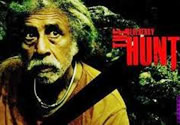
The Blueberry Hunt
Synopsis:
Colonel is standing out there in the middle of nowhere yelling at a drone while clutching a rifle like it owed him money and honestly the whole vibe is just pure chaotic energy.
So the Blueberry Hunt drops us right into this weirdly isolated world starring Naseeruddin Shah as this grumpy old recluse living in a massive, foggy, lush plantation somewhere deep in the hills, which isn't your average fluffy romance you usually expect from standard Bollywood movies, because this is an indie-spirited thriller about a guy growing a very specific, highly illegal hybrid crop.
Kartik Elangovan and Vinay Forrt pop up to complicate things while Aahana Kumra is running around trying to make sense of what's actually happening, and get this, there is this one random background extra wearing a neon green bucket hat that completely clashes with the dreary green forest and I couldn't stop staring at it for five straight minutes.
Colonel spends his days talking to his dog and monitoring his prized genetically modified blueberry plants through a bunch of dusty old security monitors, but then bad guys start sniffing around because everyone wants a piece of his illegal harvest, and then stuff happens so fast that you blink and suddenly a bunch of heavily armed mercenaries are infiltrating the property to steal the operation out from under him.
And then boom, we hit the interval point right when things are getting genuinely tense and Colonel is loading his shotgun in the dark while a completely jarring, weirdly placed musical background cue kicks in for no apparent reason, which is always hilarious in these indie Hindi movies that try to mix gritty action with arthouse pacing.
Look, the second half just goes off the rails entirely because Vinay Forrt's character gets cornered in the woods and there is this agonizingly long tracking shot of someone walking through mud that literally lasted forever, and then right after that tedious stretch, a massive shootout happens in one single, rushed sentence where half the supporting cast gets taken out without any emotional buildup whatsoever.
Characters are shouting lines like we don't have time for this at each other while the drone keeps buzzing overhead like an angry hornet, and Colonel is just refusing to back down from his remote mountain fortress even though his entire livelihood is literally going up in flames around him.
God, the editing in this stretch is so choppy that you half expect the projector to catch fire, but you just roll with it because Naseeruddin Shah's grizzled beard game is top tier throughout this entire mess, and he's totally committed to playing this grumpy botany genius who trusts plants way more than human beings.
We see the plantation burning down to crisp cinders, and the smoke is billowing everywhere across the screen, making it impossible to see half the action, but you can still hear the distant shouting of the surviving goon scrambling through the brush.
Colonel sits down heavily on his porch steps amidst the smoking ruins of his high-tech lab, staring blankly at the ruined dirt where his precious plants used to grow, and he raises his gun one last time as the screen violently cuts to black.
Vinay Forrt has this habit of squinting at the middle distance whenever a scene goes soft in the middle, and after the third time he did it during the opening twenty minutes of The Blueberry Hunt, I started wondering if someone in the lighting truck was pointing a halogen directly at his forehead. It's a small thing, but it bugged me, mostly because the film spends so much of its early runtime begging you to take its atmosphere seriously. You have this moody, damp aesthetic hanging over every wide shot, and then someone pulls a face that belongs in a completely different genre of television.
Director Anup Kurian doesn't make it easy for his actors to settle into a rhythm. The screenplay lurches forward in fits and starts, treating plot logistics like an afterthought while lingering endlessly on characters walking through thickets or staring down at dirt. If I'm honest, the pacing feels less like a deliberate artistic choice and more like someone lost half the footage in post-production and had to stretch the remaining B-roll to hit a feature-length runtime. Yet there is an odd sort of stubbornness to the way the scenes unfold, refusing to grant you the satisfaction of a clean narrative arc or a satisfying explanation for why anybody is doing anything.
Kartik Elangovan plays his part with a tight-lipped, coiled energy that occasionally threatens to snap the frame in two, especially when he shares screen space with Aahana Kumra and the two of them are forced to navigate dialogue that sounds like it was translated from a completely different language by someone who had never met a human being. Kumra brings a sharp, restless intelligence to her scenes, slicing through the murky fog of the plot with a sideways glance or a clipped syllable that suggests she knows the movie is a bit of a mess and decided to make the best of it anyway. It's a performance that reminds me a lot of what Irrfan Khan used to do in low-budget indies, anchoring every bizarre narrative detour with sheer physical presence.
The cinematography leans hard into greens and grays that make the forest locations look less like a lush natural habitat and more like a refrigerated warehouse where someone is growing illegal produce in an abandoned corner. The camera work has this nervous twitch, constantly reframing or sliding out of focus just as a character is about to reveal something interesting, which gets old fast. And the sound design deserves its own special mention, mostly for that one acoustic guitar cue that kicks in every single time a character looks pensively toward the horizon. You hear those same three melancholy notes so many times you start praying for a sudden burst of static or a lawnmower to ruin the acoustic purity of the moment.
There's a specific kind of ambition floating around here that reminds me of what Anurag Kashyap used to pull off back when he was making movies on a shoe-string and sheer stubbornness, though Kurian doesn't quite have the same knack for keeping the energy from stalling out in the third act. Hindi films rarely venture into this kind of sparse, dialogue-starved territory without loading up the soundtrack with exposition or giving the protagonist a tragic backstory involving Mumbai real estate, so seeing a picture just sit in its own weirdness for two hours without blinking is refreshing in a strange way. It doesn't care if you're bored. It doesn't care if you missed a crucial plot point while looking at your phone. It just keeps trudging through the mud, determined to finish what it started, even if nobody involved seems entirely sure what that finish line actually looks like.
The thematic undercurrents are messy, dealing vaguely with isolation and the paranoia of men who have spent too much time alone with their bad ideas, but the script refuses to hammer those points home with any real conviction. It circles around ideas of corruption and ecological decay without ever committing to being a political thriller or a gritty character study, settling instead into a middle ground that feels a lot like sitting next to a stranger on a bus who keeps muttering to themselves about government conspiracies. Bollywood movies usually try to fix a wandering narrative with a flashy dance number or an emotional shouting match in a courtyard, but this thing just keeps its head down and keeps walking.
By the time the credits finally roll, you aren't walking away with a deep appreciation for the human condition or a burning desire to debate the director's hidden metaphors. You just feel like you've spent an afternoon wandering around a very wet, very quiet patch of woods with three people who forgot to pack lunch. Vinay Forrt gives one final squint into the gray light, the guitar plays those exact same three notes one last time, and the screen goes black without offering a single word of closure.