

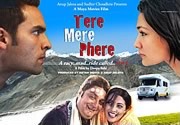
Tere Mere Phere
Synopsis:
Halfway through the film, there's this really random scene where Pooja is standing by the side of a dusty highway in Himachal Pradesh wearing a neon pink jacket that looks like it's glowing in the daylight, and she's just staring at this massive flat tire while screaming at the top of her lungs at poor Rahul because she's covered in mud and her expensive designer sunglasses are slightly bent, and honestly, that one specific visual pretty much sums up the entire chaotic energy of Tere Mere Phere, which is kind of an interesting entry into the grand tradition of bollywood romantic comedies that usually prefer shiny happy honeymoons over actual screaming matches. But to understand why these two newlyweds are having a complete psychological breakdown in the middle of nowhere, you have to go back to the beginning where Rahul and Pooja are getting hitched in a massive, overly decorated ceremony surrounded by hundreds of aunties pinching cheeks and handing out sweets, and then they decide to take this ultimate romantic road trip in a vintage camper van instead of flying to some fancy beach resort like normal people. They pack up all their matching luggage and hit the open road thinking they're starring in one of those breezy hindi films where you just look out the window and sing songs, but things go wrong immediately when the camper van starts making this horrible clanking sound that drives Rahul insane. Riya Sen plays Pooja with this constant look of high-end annoyance that feels weirdly authentic if you've ever traveled with someone who cares way too much about hotel thread counts, and Jagrat Desai plays Rahul as this eager-to-please guy who's trying so hard to keep the peace even though his eye is starting to twitch from stress. So then they pick up this other couple, played by Vinay Pathak and Sasha Goradia, who are supposed to be the quirky roadside distraction or whatever, but they end up adding even more fuel to the fire because their relationship is its own special kind of weird mess. The funny thing is, Vinay Pathak shows up in almost all our favorite quirky hindi movies playing that exact same lovable, slightly chaotic uncle-type character who gives unsolicited life advice while eating local snacks, and he completely steals every single scene he's in without even trying. Anyway, the two couples end up sharing this tiny cramped space and the road trip turns into an absolute nightmare of bad weather, flat tires, lost maps, and passive-aggressive fights over who forgot to pack the mosquito repellent. They yell at each other in gas station parking lots. They get lost in the mountains. They run out of money and have to eat weird instant noodles that taste like cardboard. Pooja cries about her ruined manicure and Rahul threatens to leave the van right there on the cliffside and just walk back to civilization. It's loud.
Right after that screaming match by the flat tire, they somehow manage to limp the broken-down van into this tiny, sleepy mountain village where there's only one operational mechanic who doesn't speak a word of English, and they have to spend the night in a ridiculously sketchy lodge that looks like it hasn't been dusted since the nineties, and Pooja spends a solid twenty minutes complaining about the lumpy mattress while Rahul just stares blankly at the ceiling wondering why he didn't just book a boring all-inclusive resort in Goa. The next morning, after surviving a breakfast of questionable local tea and burnt toast, they all pile back into the van because they realize they're stuck with each other, and they finally start actually talking about their real issues instead of just screaming about luggage and flat tires, which leads to some surprisingly raw moments where they admit that maybe rushing into marriage and expecting a fairy tale road trip was a massive mistake. They drive through some gorgeous landscapes that make you momentarily forget all the screaming and crying, and the movie sort of bounces back and forth between broad slapstick comedy and these quiet, awkward realizations about compromise and patience, reminding everyone watching that bollywood movies love a good forced-proximity redemption arc. They stop at a local roadside dhaba and share a massive meal of dal and parathas, laughing about how terrible the past few days have been and realizing that they actually survived the ultimate test of their new relationship. They pack their remaining bags, pile back into the sputtering camper van, and drive off down the winding mountain road toward home.
There is a specific kind of road movie hum that happens when the windshield wipers aren't sweeping fast enough to clear the Himalayan mist, and director Sachin Pilgaonkar spends entirely too much time lingering on those wipers in the opening reels of Tere Mere Phere. It's a small thing, but it bugged me from the jump, this weird compulsion to establish the weather before establishing why we should care about the two couples rattling around in a battered red car.
You have Pooja and Rahul, played with a teeth-grinding accuracy by Riya Sen and Jagrat Desai, who are honeymooning immediately after a shotgun wedding that barely survived the catering arrangements. Then you have the older, battle-hardened couple tagging along because why have a simple road trip when you can double the misery with Vinay Pathak and Sasha Goradia providing the Greek chorus of marital fatigue. Pathak brings that heavy-lidded, exhausted cadence he perfected somewhere around Bheja Fry, making every sigh sound like it was recorded after three days without coffee. The screenplay, credited to Chinmay Mandlekar, wants to be a modern take on the classic Hindi movie honeymoon dynamic where everything goes wrong because nature hates tourists, but it constantly forgets to give the actors enough dialogue that isn't just screaming over engine noise.
Sen plays Pooja with a screechy, high-maintenance energy that occasionally threatens to punch right through the screen, though she dials it back just enough during the quieter roadside scenes to keep her from turning into a total cartoon. Desai has the harder job because playing the straight man in a comedy about bickering newlyweds usually means standing there looking bewildered while your co-star loses their mind over a lost luggage tag. He manages to find a few quiet beats of genuine panic, especially when the car breaks down outside a village that looks like it was constructed specifically to torment urbanites from Mumbai.
The cinematography by Suresh Suvarna tries very hard to make the mountains look postcard-ready, but the digital grading has that flat, overly saturated look that plagued so many mid-budget Bollywood releases from that era. Every time the sun comes out, the highlights clip so hard the snowcaps turn into blinding white paper cutouts, which makes it kind of tough to appreciate the scenic grandeur of Himachal Pradesh when you are squinting at the monitor. And then there is the background score, which hits every emotional cue with the subtlety of a falling boulder, reminding you exactly when you are supposed to laugh and when you are supposed to feel bad about the state of modern romance.
Bollywood movies have spent decades treating honeymoons as either paradise or purgatory, and this film leans hard into the latter without ever finding the sharper satirical edges that made a picture like Pyaar Ka Punchnama actually bite. Instead of letting scenes breathe, the editing chops everything into rapid-fire reaction shots that kill any comedic momentum, lingering a fraction of a second too long on someone blinking after a punchline. If I'm honest, the whole thing feels like a extended television sketch stretched out until the seams start ripping apart.
Pathak and Goradia provide the only real ballast when the younger couple starts getting on each other's nerves, anchoring the chaos with a weary sort of chemistry that feels lived-in. When they argue about directions or hotel bookings, it doesn't feel like scripted banter; it feels like the kind of nagging that survives long after the honeymoon glow has completely worn off. Yet the film keeps dragging us back to the younger pair, who spend ninety minutes discovering that marriage requires compromise, a revelation that arrives with all the freshness of yesterday's newspaper.
There is a weirdly defensive undercurrent to the whole enterprise, as if the makers were terrified that anyone in the audience might mistake this for a serious drama about domestic discord, so they threw in a slapstick detour involving a local mechanic just to keep the energy from flatlining. Hindi films have a long, strange history of treating rural characters as comic relief or rustic philosophers, and the detour here does nothing to challenge that tired habit. You can feel the sweat dripping from the script as it tries to manufacture roadblocks out of flat tires, lost wallets, and sudden downpours.
Riya Sen handles the costume changes with a breezy indifference to the mountain climate, strutting around in chiffon while everyone else is bundled up in heavy woolens, a continuity detail that stopped bothering me around the forty-minute mark because the plot had already abandoned any pretense of logic. Desai does his best with dialogue that mostly consists of yelling calm down while Pooja throws another tantrum over a dodgy motel room with no running water. It is not a complete disaster, but it coasts on the residual charm of its supporting cast long after the main couple's bickering has curdled into pure irritation.
Hindi movies have tackled the friction of urban romance with a lot more grit and precision since this came out, leaving projects like this looking stranded in a weird middle ground where they are too broad for multiplex crowds and too slick for single screens. By the time the final stretch of highway appears and the couples are forced into a hug-it-out resolution under a fake-looking sunset, you realize you've seen this exact journey twenty times before with better punchlines and tighter editing. It's a small thing, but the sound design keeps dropping the crickets out of the mix whenever someone speaks, leaving a dead, hollow silence that reminds you you're watching people yell at each other inside a soundstage.