

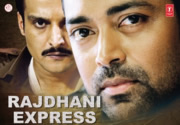
Rajdhani Express
Synopsis:
Right in the middle of the second half of Rajdhani Express, tennis star Leander Paes, who is making his weird acting debut in this thing, is just sitting on a train seat looking intensely stressed while wearing this terribly ill-fitting dark jacket with slightly frayed cuffs that honestly looked like something he grabbed off the floor of a dressing room five minutes before cameras rolled, and he's sweating profusely and muttering to himself about how his life is completely ruined because of some stolen briefcase. But to understand why a guy who can usually win at Wimbledon is sweating through cheap outerwear on a sleeper car, you have to look at how this whole mess started in the first place, which is that his character Keshav is smuggling stolen cash or secrets or whatever across state lines because he's mixed up with shady people who definitely aren't going to send him a thank you card. The funny thing is, you don't even really care about the criminal conspiracy part of the plot because you're too distracted by how awkward the pacing is and how Bollywood movies often try to tackle gritty social issues by just having characters yell exposition at each other in cramped compartments. Anyway, Jimmy Shergill shows up playing a cop, and Jimmy Shergill is always reliable in these crime thrillers even when the script doesn't give him much to do besides pace around talking into an oversized mobile phone and looking deeply concerned about national security. He's tracking this train because someone tipped off the authorities that a major crime is riding the rails, and honestly, if you've seen any procedural dramas in the vast library of Hindi movies, you pretty much know the exact beats this investigation is going to hit without needing to check your watch. So then we cut back to the passengers and there's Gulshan Grover being intensely theatrical in that way only he can manage, chewing the scenery like it's a buffet and making every single line reading sound like he's auditioning for a stage play at the back of a very large auditorium. Puja Bose and Priyanshu Chatterjee are also floating around the carriage looking worried and trying to make sense of the chaos, while Sudhanshu Pandey and Sayali Bhagat pop up to add to the general confusion of who is actually allied with whom in this moving steel tube of paranoia. Nobody trusts anybody. Just total chaos.
Right after that, the movie decides to slow things down immensely by focusing on a totally pointless conversation about a lukewarm cup of railway tea and a slightly burnt samosa that takes up at least three full minutes of screen time as the characters argue about change and service quality while an international incident is apparently unfolding in the next bogie over. It is a very strange creative choice. Then the plot just rockets forward at light speed because a gun is pulled, someone screams, the train jolts violently, and suddenly everyone is scrambling over seats while Jimmy Shergill's police squad surrounds the perimeter at the next station stop. The train speeds through the night carrying all these desperate people towards Delhi while the authorities hash out a plan to board the carriages without causing a massive panic among the civilians who just wanted a cheap commute. They argue, they shout orders, and then they just storm the doors. Total pandemonium.
Keshav tries to make a break for it through the crowded corridors, bumping into luggage racks and terrified passengers who are just trying to protect their belongings, but he gets cornered right near the pantry car by Jimmy Shergill holding a service pistol and looking thoroughly exhausted by the whole ordeal. He drops the briefcase, throws his hands up in defeat, and stares blankly out the window at the flashing lights of the station platform.
The sound mixing in the opening twenty minutes of Rajdhani Express makes it nearly impossible to tell whether characters are shouting over the rattle of train tracks or if the dialogue was recorded inside a metal shipping container during a hailstorm. You spend the first act leaning forward, adjusting your mental volume, trying to catch throwaway lines that Jimmy Shergill drops while staring pensively out of a pantry car window. If I'm honest, it's a small thing, but it bugged me right away because the film wants to be this tightly wound thriller about contemporary paranoia and corporate corruption, yet it can't even get the basic Foley work in the sleeper compartments to match the speed on the speedometer.
Ashok Kohli directs with the kind of hyperactive camera movement that usually belongs in a bad energy drink commercial, whipping from Leander Paes's sweat-beaded forehead to a passing telephone pole without ever letting a single composition breathe for more than two seconds. He treats the titular train less as a confined space where human drama might actually simmer and more as a skatepark for his crane shots, cutting away from intense confrontations just as they start getting somewhere interesting in favor of a sweeping exterior shot of the locomotive barreling through the dark. Screenplay duties are credited to a committee that seemingly watched a bootleg of The Taking of Pelham One Two Three right before sitting down with a red bull and a stack of half-baked political headlines about scams, black money, and media trials.
Leander Paes, stepping out of his Davis Cup comfort zone to carry a feature-length dramatic narrative, plays Keshav with a twitchy, deer-in-the-headlights intensity that sits awkwardly somewhere between genuine panic and a tennis player trying to remember his lines during a courtside interview after a grueling five-setter. His dialogue delivery has this strange, stop-start cadence that might have worked if the character was supposed to be chemically altered or experiencing acute shock, but here it just feels like every sentence is being hauled up a steep hill by a reluctant tractor. He does not embarrass himself entirely, which is more than can be said for half the supporting cast who appear to have wandered onto the set by accident while looking for a completely different production office in suburban Mumbai.
Gulshan Grover plays a cynical bureaucrat with the same weary sneer he has been cashing checks for since the nineties, and honestly, it is comforting to watch someone hit their marks with absolute mechanical indifference while everyone else is sweating bullets over the heavy-handed socio-political monologues. Puja Bose and Sayali Bhagat pop up in various states of distress, serving mostly as human punctuation marks for scenes that require someone to look terrified while looking at a smartphone screen flashing red. Priyanshu Chatterjee and Sudhanshu Pandey chew through the exposition with varying degrees of success, though Pandey has this recurring habit of dropping his voice to a theatrical whisper whenever the plot demands a sudden burst of gravity.
The cinematography relies heavily on a jaundiced color palette that makes every coach look like it was lit by a flickering fluorescent tube in a government dispensary that ran out of funding during the UPA era. Shadows are crushed into muddy blocks, and whenever the train enters a tunnel, the lighting rig seems to panic, bathing the actors in an electric blue hue that feels entirely divorced from the dusty, cramped reality of Indian railways. The background score is a relentless, blaring assault of electronic percussion and faux-orchestral stings that announce every single plot twist three seconds before it actually limps onto the screen, leaving zero room for suspense to build naturally out of the claustrophobic setting.
Hindi films have a long, proud tradition of utilizing trains as narrative pressure cookers, stretching all the way back through classics where compartments functioned as miniature societies governed by their own sudden rules and fleeting alliances. Rajdhani Express tries to graft that heritage onto a modern corporate thriller template, but it forgets that tension requires stakes we actually care about rather than abstract talk of shell companies and offshore accounts delivered via hurried telephone conversations. The thematic ambitions of the script gesture broadly toward how the system chews up ordinary citizens and spits them out onto the tracks, yet it treats these ideas like talking points on a late-night debate show rather than emotional realities for the people trapped inside the carriage.
There is a specific supporting actor in the third act who plays a local politician's nephew, and his voice is so aggressively, poorly dubbed that it sounds like his lines were recorded in an empty stairwell using an iPhone 4 from a decade ago. It pulls you right out of the film's climax, shattering whatever fragile mood the director managed to scrape together during the preceding ten minutes. You find yourself staring at his jaw movements, wondering how anyone in the post-production suite watched the final cut and decided that mismatch was acceptable for a theatrical release across multiplexes.
By treating its central hostage situation as an excuse for endless speechifying about moral decay, the movie forgets to make the actual journey compelling on a moment-to-moment basis. Characters wander up and down the narrow corridors with purpose-built urgency, shouting at each other about redemption and betrayal while passengers in the background quietly try to eat their lukewarm railway dinner trays without making eye contact with the camera. It is messy, uneven, and terribly paced, stumbling through its runtime like a commuter trying to sprint down a moving aisle with a heavy suitcase during an emergency brake.
You can see the bones of a decent B-movie thriller buried somewhere underneath the bloated dialogue and the chaotic editing choices, but digging it out requires more patience than the picture deserves. Leander Paes gives it an earnest try, hurling his physical energy at a script that simply cannot support the weight of his sweating, breathless sincerity. The whole enterprise eventually rattles to a halt, leaving you with nothing much to think about except the headache induced by that overzealous sound mix and the lingering realization that Bollywood movies really ought to spend more time on their script revisions and less on renting high-end camera cranes for interiors.