

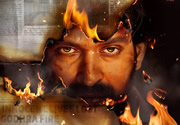
The Sabarmati Report
Synopsis:
Vikrant Massey is literally screaming across a chaotic, smoke-filled newsroom while a giant brown bulky desktop computer monitor from the early two-thousands sits right behind him displaying some deeply pixelated graphic that nobody is even looking at because everyone's running around like crazy people and papers are flying everywhere. Look, the Sabarmati Report is wild from the jump, but let us back up a bit and talk about how this whole mess starts in the chaotic world of modern Hindi movies where journalists are constantly drinking cutting chai and shouting at each other about deadlines.
Vikrant plays Samar Kumar, a Hindi journalist at a major English-dominated newspaper called The Awakening, and he's constantly getting roasted by his snooty colleagues because he reports in Hindi instead of speaking fancy pants English like everyone else in the office. Raashi Khanna plays Amrita Gill, a ambitious cub reporter who teams up with him, and honestly, she’s just trying to survive the corporate politics of the newsroom while everyone is wearing the most aggressively nineties and early noughties corporate casual clothes you've ever seen, complete with chunky silver jewelry and oversized blazers that make them look like they're playing dress-up in their parents' closets.
Stuff happens and then boom, February 2002 rolls around, and suddenly we are hurtling toward the absolute nightmare at Godhra station where the Sabarmati Express train gets attacked and burned, and the movie pivots hard from a mildly boring workplace drama about office snobbery into this heavy, tense, terrifying sequence of events that changes everything for the characters. Ridhi Dogra shows up as Manika Shukla, this super intense senior journalist who has this one particular scene where she's holding a red pen and glaring at a printed draft so hard you'd think the paper personally insulted her ancestors, and her line delivery is just so fiercely dramatic that you can't look away from the screen even for a second.
And then right before the interval block hits you like a freight train, the pacing goes completely haywire and we get this random montage of newsroom panic that doesn't even let you catch your breath before the screen abruptly cuts to black with the word INTERVAL flashing aggressively in bright red letters while the audience runs out to buy overpriced popcorn. Hindi films love a good intermission to let you process the trauma, and trust me, you need it here because the first half is just layers upon layers of office politics building up to the actual train tragedy.
God, the second half doesn't waste any time getting dark, because years pass and Samar is completely a broken man drowning his sorrows in cheap alcohol because the official media narrative completely covered up the actual truth of what happened on that fateful morning, and he is sick of it. Amrita tracks him down in this dingy, dimly lit bar where he's nursing a glass of whiskey, and she convinces him to help her reopen the old case, which leads them straight into a web of dangerous conspiracies, corrupt politicians, and terrified eyewitnesses who refuse to talk. Prince Kashyap and Sundip Ved pop up in these supporting roles as shady officials and nervous bureaucrats who literally sweat through their button-down shirts every time Samar asks a hard question, and honestly, the wardrobe department deserves an award just for how aggressively stained those actor's armpits look under the harsh interrogation lights. Nazneen Patni, Hella Stichlmair, and Digvijay Purohit wander in and out of the investigation scenes as foreign observers and local contacts, dropping exposition lines that sound like they were read straight off a Wikipedia page, but hey, someone's gotta explain the plot to the audience.
Sandeep Kumar plays another reporter who gets caught up in the crossfire, and there's this wild sequence where they sneak into a government archive room that has piles of dusty manila folders stacked up to the ceiling in a way that is a massive fire hazard. They manage to steal a crucial piece of physical evidence—a burnt audio cassette that somehow survived the inferno—and they run out into the rainy streets of Delhi with bad guys chasing them in a white ambassador car that honks its horn aggressively the entire time.
Bollywood movies always need that one big emotional confrontation scene, and here it happens in a cramped television studio where Samar finally snaps on live television, looking straight into the camera lens with bloodshot eyes and yelling out the unfiltered truth about the Godhra train burning while the station director frantically signals for the feed to be cut. He slams his fist down on the glass news desk so hard that a plastic coffee cup goes flying across the floor, splashing brown liquid all over a production assistant's shiny black loafers. The screen fades to black as the credits roll and police sirens wail in the background.
There is a specific kind of sound a ceiling fan makes when it is wobbling on its mount, a rhythmic metallic clicking that somehow always manages to drown out the dialogue in the lower-budget corners of Hindi cinema, and I kept hearing that exact rattle during the quietest stretches of The Sabarmati Report. It is a small thing, but it bugged me, dragging my attention away from the frame and straight back into the humid dubbing studio where half of these incidental lines were clearly pasted together over lukewarm tea.
Opening cold on the burnt-out shell of the S-6 coach, directors Dheeraj Sarna and Ranjan Chandel waste precisely zero frames setting up the stakes, dropping us directly into the soot-stained boots of reporters scrambling for inches of column space. Vikrant Massey plays Samar Kumar, a Hindi journalist whose very accent is treated as a professional liability by his English-preferring peers in the newsroom, sliding through the wreckage with a kind of exhausted desperation that feels entirely earned. Massey has this knack for looking like he hasn't slept in three days without turning it into a personality trait, and the screenplay by Arjun Bhande and Avinash Singh gives him enough broken dialogue to make that exhaustion stick to his skin. Yet the film cannot quite decide whether it wants to be an investigative procedural about the Godhra train burning or a broader reckoning with the state of television journalism, lurching between tight, claustrophobic edit suites and sweeping historical flashbacks that belong in an entirely different picture.
Raashi Khanna enters as Manika Shukla, the shiny new anchor whose pristine blazers and carefully modulated outrage represent the corporate sanitization of the news, and her early scenes with Massey crackle with the kind of workplace friction most bollywood movies avoid in favor of immediate, frictionless romance. They argue about archives, about the weight of a single headline, about the exact distance between a fact and a preferred narrative. Then Ridhi Dogra shows up as Amrita Gill, a veteran reporter whose cigar smoke and weary cynicism recall the world-weariness of George Clooney's character in Michael Clayton, though the comparison does the film no favors because the writing simply isn't sharp enough to sustain that level of noirish swagger.
There is a recurring visual motif involving dusty filing cabinets and yellowed newsprint that feels less like a deliberate aesthetic choice and more like the DP was told to make everything look as sepia-toned as possible to signify seriousness. The lighting often flattens the actors against their backdrops, turning the bustling newsrooms into theatrical sets rather than lived-in spaces, and the soundtrack relies on a heavy, thumping percussion that hits you over the head every time someone uncovers a piece of microfilm. It's not great, not bad, just there, taking up acoustic space until the next scene arrives to demand our emotional allegiance.
Where the picture actually finds its pulse is in the smaller interactions between Samar and his underpaid, overlooked stringers—played with lived-in panic by supporting actors like Prince Kashyap and Sundip Ved—who know that a single bad byline can get them thrown out of their rented rooms. They don't talk about democracy or the freedom of the press with capital letters; they talk about rent, about printers breaking down, about the editor-in-chief shouting down the phone from a golf course. These moments ground the sprawling historical tragedy in the mundane panic of daily survival, reminding us that the people who write the first draft of history are usually just trying to make enough to buy dinner.
When the film shifts gears into the courtroom-style inquiries and the breathless confrontations between network bosses and ethics boards, the pacing starts to buckle under the weight of its own earnestness. Nazneen Patni and Digvijay Purohit deliver their lines with the kind of theatrical projection usually reserved for community theatre, pulling the camera out of the intimate spaces Massey and Khanna had worked so hard to build. It is a persistent failing of recent hindi films that they mistake volume for urgency, substituting genuine dramatic tension for characters shouting over each other while a graphic flashes on screen.
Yet, for all its structural wobbles and heavy-handed editorializing, the movie refuses to let its characters off the hook completely. Samar is not portrayed as a saintly crusader of truth; he is petty, he is easily bought off with a promotion, he drinks too much cheap rum when the presses stop rolling, and Massey lets us see the quiet shame of a man who knows he traded his integrity for a slightly larger cabin on the third floor. That refusal to sanitize the protagonist keeps the narrative from sliding entirely into propaganda, even when the editing actively works against nuance.
The supporting turns by Sandeep Kumar and Hella Stichlmair populate the periphery with faces that look like they actually rode the Sabarmati Express rather than just read about it in a script supervisor's notes. When the credits finally roll, accompanied by a low, whining synth tone that lasted a beat too long in the mix, there is no grand resolution to the questions raised about media complicity and state memory. The ceiling fan in the screening room kept spinning, the lights came up on empty seats, and the questions about who gets to write the story and who gets crushed beneath the wheels remained stubbornly, messily unresolved.