

Asoka
Synopsis:
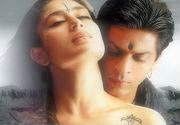
Shah Rukh Khan running shirtless through a shallow puddle in 2001 looked like a different species of movie star than the guy in the blazer standing next to Madhuri Dixit. Santosh Sivan shot him like an animal caught in torchlight, all tendons and dust, sweaty skin catching the hard edge of a noon sun that felt less like a lighting setup and more like an act of god. If I'm honest, that visual remains the only reason to sit through the bloated middle hour where the plot forgets its own name. Most historical epics in Hindi cinema feel like they were ironed, folded, and stored in a cedar chest before a single frame is exposed. This thing smelled like horse sweat and iron. It was messy in a way that modern Bollywood movies rarely risk anymore, preferring clean color grades and safe digital gloss to the actual grime of ancient India. Santosh Sivan directed it, meaning the camera never sat still, sometimes swooping down into the mud with the extras until you could practically smell the horse dung, then soaring up high to catch the geometric patterns of marching armies that looked less like CGI swarms and more like thousands of real people getting paid thirty rupees a day to die on cue. The screenplay takes the historical skeleton of the Mauryan emperor and wraps it in a melodramatic wet blanket that nearly smothers the momentum, dragging in half-baked romance tracks and villains so mustache-twirlingly cartoonish they belong in a stunt show at a Mumbai theme park. Ajit Kumar plays the jealous half-brother with all the subtlety of a falling anvil, growling his lines like he has a mouthful of gravel while wearing leather armor that probably weighed forty pounds. You can see the exact moment the budget started running out during the river battles, where the extras stop swinging their swords with any real conviction and just sort of lightly tap each other on the shoulder pads while waiting for the lunch whistle.
Shah Rukh Khan commits so hard to the title role that his neck veins look ready to burst through the celluloid during every third scene, screaming his dialogue with a guttural intensity that belongs in an entirely different picture. He balances the megalomania and the self-pity with surprising grit, even if his transition from ambitious prince to remorseful mass murderer happens off-screen during a convenient montage. It is a performance of pure physical exhaustion. He takes hits, falls down ravines, gets dragged through rivers, and somehow keeps that peculiar intensity in his eyes even when he is just staring blankly at a camp fire. Kareena Kapoor shows up as a runaway princess with a deer-in-the-headlights pout that rarely shifts, spending half her screen time wandering around lush forests looking like she stepped out of a high-end shampoo ad rather than a brutal territorial war zone. Their chemistry is weird. It lacks the easy domestic charm they usually traded in contemporary romances, replaced instead by frantic rolling in the dirt and breathless dialogue exchanges about destiny that sound like they were translated from Sanskrit by way of a cheap paperback novel. Danny Denzongpa gets about four minutes of screen time as an aging commander and manages to steal every single one of them simply by standing still and refusing to overact, a rare virtue in a cast where everyone else is shouting at the top of their lungs. Rahul Dev plays the primary heavy with a terrifying focus, carving up the landscape with a spear and giving the action scenes an actual sense of physical danger that keeps the second hour from stalling out completely. Then there is the child actor Suraj Balaje playing the younger version of the prince, who has this one reaction shot of pure, unadulterated terror that the editor cuts back to at least four times too many during the early palace massacres, a small mechanical quirk that completely deflates the tension every single time it loops.
The soundtrack by Anu Malik leans heavily into thunderous percussion and dramatic choral chants that sound suspiciously like Hans Zimmer trunk music borrowed from Gladiator, though the romantic numbers hit a strange, hypnotic register. San Sanana uses traditional instrumentation and a rhythm section that drives right through your skull, creating a sensory overload that makes the desert heat palpable in an air-conditioned multiplex. Yet the film never quite figures out how to balance its massive scale with the intimate psychological collapse at its center. Historical epics usually fall into one of two traps, either turning into boring history lessons or descending into wall-to-wall noise, and this one happily embraces both extremes within the span of a single reel. The battle choreography has a chaotic, unpolished energy that recalls Akira Kurosawa by way of regional action cinema, avoiding the pristine wire-fu of later historical dramas. No one is floating through the trees. People get hacked down with heavy iron. Limbs detach with a dull thud. It is needlessly gory in a way that feels authentic to the period without ever achieving the bleak, poetic despair of something like Braveheart, which this movie clearly watched on a rented VHS tape the weekend before shooting began. The framing often traps the characters against vast, unforgiving horizons, making them look small and pathetic against the landscape they are trying to conquer, which undercuts the bombastic dialogue about world domination.
The thematic spine of the story is the familiar, well-worn paradox of military victory leading directly to spiritual bankruptcy, but the film treats this transition like a switch being flipped rather than a slow erosion. You get forty-five minutes of sword fights and political backstabbing followed by fifteen minutes of regret under a tree, and the tonal gear-shift gives you whiplash. The Kalinga war sequence is a muddy, shrieking meat-grinder that runs on pure adrenaline and visual revulsion, showing bodies piled in heaps while the protagonist walks among them with a slack jaw and hollow eyes. It works as sheer sensory spectacle, even if the philosophical implications of the massacre are handled with the subtlety of a sledgehammer hitting a Ming vase. Hindi movies have always struggled with pacifist messaging because the audience usually pays to see the hero punch someone through a brick wall, and this picture tries to have it both ways by giving us two hours of glorious violence followed by a five-minute title card about the virtues of non-violence. It is a hypocritical stance that feels baked into the very DNA of commercial cinema, where moral redemption is just another narrative beat to hit before the credits roll. The supporting players drift in and out of the narrative without leaving much of an imprint, serving mostly as moving targets for the various arrows and spears flying across the frame. By the time the emperor throws his sword into the ocean, you feel less like you have witnessed a profound spiritual awakening and more like everyone involved simply ran out of fake blood and needed to wrap the shoot before catering packed up for the night.