

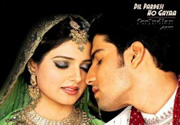
Dil Pardesi Ho Gayaa
Synopsis:
There is literally an extra standing behind Amrish Puri in this one random scene wearing a neon green shirt that makes zero sense for the tense military bunker vibe, and he is just aggressively swaying side to side like he is listening to a completely different song in his head while major national security secrets are being discussed at top volume. Anyway, to understand why everyone is screaming in a war room, we gotta go back to the start of Dil Pardesi Ho Gayaa, which is basically your quintessential early 2000s cross-border romance where our hero Rahul, played by Kapil Jhaveri with hair gel that defies the laws of physics, falls head over heels for a Pakistani girl named Rukhsar, played by Saloni Aswani, who crosses the border under the most convoluted circumstances imaginable because that is just how older hindi movies used to roll.
So then Rahul and Rukhsar keep meeting up in secret places while dramatic background music plays, and honestly, the sheer amount of slow-motion running across grassy fields in this movie is staggering, like you would think they are training for the Olympics instead of trying to avoid getting caught by military patrols. The funny thing is, right when they are having this super intense conversation about their impossible future and how their families will never accept them because of historical beef, the director just cuts straight to a massive, glittery song and dance number with backup dancers holding oversized props, which is a classic bollywood move that always throws you off when you are trying to take the plot seriously.
Right after that chaotic musical break, the villains show up, led by Ashutosh Rana who is practically chewing the scenery with his terrifying stares and vein-popping anger, and he is playing this ruthless military guy who wants nothing more than to capture Rahul and shut down any hope of peace. Ashutosh Rana does this one specific thing where he taps his riding crop against his boot every time he delivers a threat, and it happens like forty times in a single scene, which gets deeply hypnotic and hilarious if you are paying attention to the tiny details instead of the actual geopolitical crisis unfolding on screen.
Then we slam right into the interval block, which hits us with a cliffhanger involving a ticking bomb and a sudden ambush right at a family wedding, and trust me, the intermission card pops up on the screen right as Kapil Jhaveri is screaming no in agonizing slow motion. The second half wastes no time and amps up the chaos because Amrish Puri enters the frame with a booming voice that rattles your speakers, playing a stern authority figure who has to choose between his strict military duty and letting the young lovers escape across the heavily guarded border.
The pacing gets completely frantic here as characters start switching sides, secret documents get passed around in dusty market alleys, and there are multiple fistfights where stunt doubles take terrible, gravity-defying falls over wooden fruit carts that explode into tomatoes and oranges. They capture Rukhsar and lock her in a bleak stone room, and Rahul has to team up with a ragtag group of local allies to plan a ridiculously dangerous rescue mission that involves sneaking past dozens of armed guards using nothing more than a stolen truck and sheer stubbornness.
They break into the compound, guns are blazing in every direction, Ashutosh Rana does a wild evil laugh right before getting into a brutal hand-to-hand brawl with Kapil Jhaveri in a dusty courtyard, and bullets are flying past ancient stone pillars while the score swells to maximum volume. Amrish Puri arrives just in time to deliver a booming patriotic monologue about love and borders that stops the shooting for a solid three minutes, and then he dramatically drops his weapon into the dirt and nods his approval at the young couple.
Rahul and Rukhsar sprint toward the open gates hand in hand while the entire military squad salutes them, and they jump into the back of a moving jeep as it speeds away into the dusty horizon.
Kapil Jhaveri runs across a ridge in the middle of a scene where he is supposed to be having a quiet conversation, and if I'm honest, that little wobble in his posture tells you nearly everything about how Dil Pardesi Ho Gayaa operates on a mechanical level. Saawan Kumar Tak made a movie that looks like it was edited with a meat cleaver during a power outage, throwing period tensions and cross-border romance into a blender without checking if the lid was on. It is a messy affair from the opening frames, leaning hard on the kind of aggressive nationalism that Bollywood movies of that era treated like free parking, except here the volume is cranked past ten and the knob fell off.
Ashutosh Rana arrives on screen and immediately sucks all the air out of the room, playing a militant with a terrifying, unblinking intensity that feels stolen from a completely different picture. He gives his dialogue a slippery, venomous delivery that makes you wish the camera would just stay on him instead of panning over to the romantic leads who look perpetually confused about where to stand. Amrish Puri brings a thundering presence to his role, chewing the scenery with an appetite that borders on reckless, though he has played this exact patriarch a hundred times before in other Hindi films without breaking a sweat. Saloni Aswani tries her best to anchor the emotional core of the narrative, but she is constantly fighting against a script that treats her character as little more than a weeping prop for men to argue over.
The cinematography looks like it was shot through a dirty Vaseline jar, bleeding light into every lens flare while actors sweat under harsh studio lights meant to simulate the harsh deserts of Rajasthan or wherever the hell the production designers decided the border was located today. Then there is the matter of the sound design, which loves to drop a screeching violin cue over a close-up of a background extra blinking too slowly. It is a small thing, but that specific looping audio sting repeats itself four times in the first half hour alone, and it starts to grate on your nerves long before the intermission arrives. You can practically hear the tape hissing in the background of quiet dramatic exchanges, revealing the low-budget seams that no amount of sweeping orchestral swells can successfully cover up.
Tak attempts to graft a Romeo and Juliet dynamic onto a geopolitical powder keg, but the political backdrop is handled with the subtlety of a brick thrown through a stained-glass window. Hindi movies have often used cross-border love stories to gesture toward peace, but this one uses the tension as a blunt instrument to justify endless shouting matches about honor, duty, and betrayal. The screenplay keeps finding new ways to drag out the inevitable confrontations, looping through the same three emotional beats until you feel like you are watching Gadar: Ek Prem Katha played on a broken VCR at three in the morning. Characters make decisions that defy basic human logic simply because the next scene requires someone to cry near a barbed-wire fence.
Jhaveri lacks the rugged screen presence needed to carry a romantic drama of this weight, drifting through musical numbers with a pleasant blankness that suggests he was cast purely based on his jawline and a headshot. When he tries to look angry, his eyebrows move independently of his eyes, creating a strange disconnect that makes his emotional outbursts feel entirely performative. Aswani matches his energy with a similar stiffness during their early exchanges, though she manages to find a shred of genuine vulnerability once the tear-jerking third act kicks into gear and everyone is forced to scream their lines over a booming percussion track. The supporting cast features several actors who are clearly dubbed by someone else in a recording booth across town, resulting in mouth movements that never quite match the audio being piped out of the theater speakers.
The music, composed by Usha Khanna, tries desperately to provide the emotional lift that the direction lacks, offering up melodies that occasionally stick in your head despite the generic lyrics about longing and lost homelands. Yet the choreography in these musical sequences often undermines the mood, placing backup dancers in neon outfits behind people mourning a dead relative in a dusty village square. It is this persistent tonal whiplash that defines the entire viewing experience, dragging you from a genuinely tense interrogation scene straight into a brightly colored wedding song without so much as a narrative breath in between.
There is a distinct lack of rhythm in how the scenes transition, cutting away from dramatic moments before they have time to breathe, yet lingering on a weeping extra for five full seconds too long just to make sure the audience gets the point. You end up watching the edges of the frame more than the actual actors, tracking the boom mic dipping into the top of a wide shot or noticing how the extras in the local marketplace are just standing around waiting for the director to yell cut. It is a production that feels rushed out the door to capitalize on a fleeting political sentiment, leaving behind a cinematic patchwork that barely holds together under its own weight.
By the time the climax arrives with its predictable flurry of gunfire and tearful monologues, you are mostly just exhausted from the sheer volume of it all. Dil Pardesi Ho Gayaa does not offer any fresh insights into the wounds it attempts to probe, preferring instead to rely on well-worn clichés that have been gathering dust in storage rooms since the nineties. It remains a fascinatingly misguided artifact of commercial filmmaking, stumbling through its own ambitions with a heavy-handed sincerity that almost makes you forgive the atrocious editing and the repetitive background scores, though not quite.