

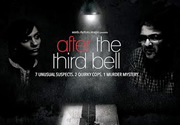
After the Third Bell
Synopsis:
Okay so Udayan Banerjee is literally screaming his lungs out in the middle of this dusty rehearsal room while holding a bloody prop dagger and glaring at a half-eaten samosa on a plastic chair. It is absolute chaos and nobody is even trying to stop him because that is just the kind of gritty energy we have come to expect from modern indie-leaning bollywood projects these days, which honestly feels like a nice break from the usual giant studio gloss you see in most mainstream hindi movies. But to understand why he is losing his mind over a fake weapon in a shady theatre backstage, we gotta go back to the very beginning when things were at least pretending to be normal.
Akanksha D. Sharma plays this super driven theater actor who is just trying to hustle her way through life and keep her sanity intact while dealing with the most annoying bunch of pretentious directors you can possibly imagine. She walks into the audition room wearing this slightly faded yellow kurti with these weird silver jhumkas that kept clinking together every time she turned her head too fast, and I swear I spent like ten whole minutes staring at those earrings wondering where she bought them because they looked so authentic and indie-chic. Right after that minor distraction, Sukhesh Arora enters the frame as the brooding producer with a million unpaid debts and a very questionable mustache, and he immediately starts yelling at everyone about budget cuts.
So then they all get roped into this cursed stage production that everyone keeps whispering about in hushed tones because the last director went completely insane and vanished into the night. Udayan is cast as the lead because he is the only guy desperate enough to take the job, and rehearsals start getting intensely weird with all these creepy psychological exercises. They throw in a random item song right here for literally no narrative reason whatsoever, which is a classic bollywood trope that always cracks me up because the characters are stressed about murder threats and suddenly they are dancing in neon body paint.
Then we hit the interval block and everyone in the theater is just gossiping about how much sugar was in their popcorn while the screen goes dark right on Udayan's terrified face. Act two gets super dark out of nowhere. We find out that the play isn't actually a play at all, but rather an elaborate trap set up by some shady investors who want to launder money through theater ticket sales. Sukhesh tries to steal the cash box from the green room, but Akanksha catches him red-handed and yells get your hands off that money or I swear I'll call the cops.
Things spiral out of control so fast that you can barely keep up with who is double-crossing whom in this messy web of backstage drama. Udayan gets locked in the prop room, Sukhesh gets chased down an alley by a guy in a phantom costume, and Akanksha has to improvise an entire fake monologue on stage to stall the audience while real crimes are happening backstage. They wrap up the whole criminal conspiracy in about thirty seconds of rushed dialogue where the police show up out of nowhere and arrest the corrupt producer without any real detective work. Udayan drops the prop dagger on the wooden stage floor, stares blankly at the empty seats, and walks out the stage door into the heavy rain.
Udayan Banerjee is wearing a sweater that has seen significantly better days in roughly the first twelve minutes of "After the Third Bell," and if I am honest, that woolen garment told me more about his character than the script bothered to manage for the next hour. There is a specific kind of threadbare desperation captured in the way the cuffs are stretched out, limp from years of being shoved up forearms while fretting over overdue utility bills or late-night cue sheets. The film drops us directly into the claustrophobic green rooms of a regional repertory company that smells faintly of cold greasepaint and old damp wool, refusing to offer a helpful orientation map or even a title card to anchor the geography.
Directional duties are shared across an invisible line by a pair of credited filmmakers who clearly watched "The Party" once too often during their formative years at film school, though they lean far more heavily toward the agonizing silence of a Tuesday afternoon rehearsal than any kind of farce. They block their actors into corners and let the camera drift, sometimes losing the speaker entirely behind a stack of moth-eaten flats or a wardrobe rack loaded down with heavy velvet drapes. It’s a messy, occasionally frustrating screenplay that refuses to explain why Banerjee’s aging character is still holding onto a stage career that pays mostly in lukewarm tea and quiet humiliation. There are whole stretches where characters mumble into their collars while turning pages of a dog-eared script, and while this mimics the actual lethargy of low-budget theater life, it occasionally leaves the audience stranded without a paddle.
Akanksha D. Sharma enters the narrative about twenty minutes in, slamming a heavy prop door so hard that the wall panels visibly ripple, and she brings an erratic, dangerous physical energy that the picture desperately needs to keep from sliding down a drainpipe of pure gloom. She plays a fading ingenue who refuses to age out of roles written for women half her years, delivering her lines with a fierce, brittle theatricality that marks her out from the more naturalistic mumberings of her co-stars. Sukhesh Arora, meanwhile, plays the beleaguered stage manager with a perpetual look of someone who has just swallowed a very small, very sharp pebble and isn't quite sure how to cough it up without causing a scene. His performance relies entirely on tiny, miserable adjustments of his wire-rimmed spectacles and the way his left eye starts to twitch whenever Banerjee opens his mouth to improvise.
The cinematography stays remarkably low-contrast and muddy, utilizing whatever available fluorescent tubes happen to be humming overhead in those drafty municipal halls, which gives the entire enterprise the visual texture of a mid-nineties public access broadcast that somebody happened to rescue from a damp basement. There’s a tiny editorial quirk that drove me slightly mad by the halfway point, wherein every single scene transition relies on a slow, slightly muddy dissolve that lingers on an empty chair for four full beats too long. It’s a small thing, but it bugged me every single time it happened, draining whatever rhythmic momentum the dialogue had just managed to scrape together. The soundtrack consists almost entirely of traffic noise leaking through cracked windowpanes and the distant, rhythmic thud of a metronome that someone left running in a neighboring music room.
Hindi films have occasionally dabbled in the meta-theatrical space with varying degrees of success, usually opting for glossy backstage melodrama or broad satire about the travails of commercial stardom, but this project strips away all the glamor until nothing is left except bare boards and splintered plywood. It asks uncomfortable questions about why people continue to punish themselves for the sake of an ephemeral art form that nobody in the surrounding neighborhood cares about anymore, contrasting the grand poetry of classical verse against the miserable reality of sleeping on a cot behind the prop truck. Banerjee doesn't play this as noble suffering, which is where lesser performers usually trip over their own shoes; he plays it as an embarrassing compulsion, like someone who keeps scratching an old scab long after it stopped itching because the irritation is preferable to feeling nothing at all.
There is no grand, sweeping finale where the troupe suddenly finds their collective groove and delivers a performance that brings the house down to thunderous applause, because this is not that kind of movie, and honestly, the world has enough hollow triumphs packaged for easy consumption. Instead, the curtain simply comes down on a botched rehearsal in an empty auditorium while the cleaning crew starts turning off the overhead lights row by row from the back, leaving the actors to pack their bags in the growing gloom. Arora mutters something about tomorrow's schedule that gets completely swallowed by the sound of a vacuum cleaner firing up near the orchestra pit, and that feels entirely appropriate for a piece that refuses to offer easy comfort or neat thematic resolution.