

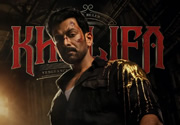
Khalifa
Synopsis:
The Ordinary Beginning: The film introduces Mambarakkal Aamir Ali (Prithviraj Sukumaran), a seemingly ordinary, carefree textile business owner living in Kerala. His life is peaceful until a sudden and severe family crisis strikes: his businessman father, Younus Ali (Renji Panicker), faces a major collapse, and a series of devastating events—including a tragic death/arrest—rock the family.
Uncovering the Heritage: Thrust into desperation, Aamir discovers a deeply hidden family secret. He learns that he does not come from a simple merchant background; rather, his family belongs to "gold-smuggling royalty." His grandfather is the legendary syndicate figure Mambarakkal Ahmed Ali, alias "Baba" (played in a commanding extended cameo by Mohanlal).
The Descent Into the Underworld: Forced by circumstance to protect his crumbling family and avenge his father, Aamir steps away from his peaceful life. He embraces his bloodline, entering the dangerous and high-stakes world of illegal smuggling.
The Rise of a Syndicate Boss: Aamir scales the ranks of the criminal syndicate, transitioning from an outsider into a ruthless, syndicate-level gold smuggler. Along the way, he navigates betrayals, encounters underworld power players like Harris Basheer (Neil Nitin Mukesh), and relies on trusted confidants and mentors like Seittuji (Suresh Oberoi).
Legacy and Climax: As Aamir aggressively secures his dominance and tracks down those responsible for his family's ruin, the narrative explores the heavy psychological toll of his choices. The film culminates in a high-octane setup that connects Aamir's modern-day reign directly to his grandfather's formidable legacy, leaving the door open for a broader sequel focusing deeper on Baba's historical role in the underworld.
The sound mix in the opening sequence is slightly off-kilter, leaning into a bass frequency that rattles the speakers just enough to make you wonder if the theater has a blown sub or if the film simply insists on being aggressive from frame one. It’s a small thing but it bugged me, mostly because the movie has plenty of other ways to capture your attention without vibrating the seats. We are dropped into a dense, humid cityscape where Mohanlal exists in a state of perpetual, simmering restraint. He doesn't move so much as he occupies space, pulling the gaze of every other actor on screen toward his orbit.
When Prithviraj Sukumaran finally steps into the frame, the energy shifts into something sharper, more clinical. There is a precise geometry to how he interacts with the physical world, which feels like a direct evolution from his work in Lucifer, though stripped of the populist bravado that defined that earlier role. He is playing a man who has calculated his own obsolescence. The screenplay by Vysakh doesn’t spoon-feed us the historical grievances driving this friction. Instead, it lets the silence between the dialogue tracks do the heavy lifting, relying on the sheer gravity of these two icons sharing the same lens.
Then there is Tovino Thomas, arriving like a localized storm. He provides the kinetic energy that the slower, more deliberate stretches of the narrative desperately need to stay afloat. While the Hindi movies I caught on the flight over seemed obsessed with over-explaining the psychological motivations of their villains, this script chooses a quieter, more unsettling path for Tovino. He is erratic, sure, but his mania feels earned rather than pasted on for effect. The chemistry between the three leads isn't balanced, and that works because life isn't balanced either. It’s messy.
The cinematography leans hard into high-contrast chiaroscuro, turning the city into a series of bruised purples and burnt oranges. Every shadow feels intentional, hiding details that the camera refuses to reveal until the very last possible second. It’s gorgeous stuff, but the editing occasionally struggles to keep pace. There is a specific transition involving a match cut between a burning cigarette and a distant lighthouse that hangs on the screen for about four frames too many. It feels like an indulgence, a moment where the editor fell in love with their own cleverness and forgot that the audience is already ahead of them.
Themes of inherited power and the rot that settles into institutions usually play out like a dry lecture in scripts like this, but here, the politics are tethered to the dirt. You feel the grit under the fingernails. It’s not just about who controls the wealth or the territory; it’s about the way these characters have hollowed themselves out to hold onto it. Mohanlal’s eyes, in particular, tell a story of someone who has forgotten how to be anything other than a weapon. It’s not great, not bad, just there, hanging in the air like smoke.
The soundtrack avoids the trap of wall-to-wall orchestration, choosing instead to lean on sparse, metallic percussion that syncs with the pulse of the action. When the score does swell, it’s earned, though there’s a recurring motif involving a string quartet that feels like it’s been lifted from a dozen other thrillers of this ilk. It’s effective, sure, but it lacks a distinct identity. Why do we keep relying on the same minor-key shifts to indicate a looming threat? It’s a safe choice in a film that otherwise takes significant risks with how it treats its audience’s patience.
Prithviraj’s performance is the anchor, mostly because he’s the only one who seems to know exactly when to push and when to retreat. If I’m honest, there are sequences where his dialogue feels slightly too elevated for the setting, as if he’s reading lines from a classic stage play while everyone else is operating in a neo-noir reality. It doesn’t break the film, but it creates a strange dissonance that persists. It’s hard to tell if this was a stylistic choice by the direction team or just a clash of acting methodologies.
The sheer density of the storytelling is what keeps you strapped in. You aren't watching a standard hero-villain dynamic play out across a linear timeline. Instead, the narrative folds over itself, revealing that the history of this place is just a series of repetitive betrayals disguised as progress. It reflects the way globalized cinema, even within the massive output of Bollywood, has started to move toward these darker, more cynical portraits of ambition. We aren't being asked to root for anyone. We are being asked to observe the carnage.
One of the more jarring aspects is the lighting shift during the climactic stand-off. The scene starts in a brutalist, sun-bleached plaza, but the film suddenly shifts into a color-graded blue that feels totally artificial. It disrupts the visual continuity. I found myself staring at the background extras, wondering if the continuity supervisor had stepped out for a coffee. It is a minor technical oversight, but it yanked me right out of the tension that had been building for the previous hour.
Still, the tension holds. The way the movie handles the passage of time—condensing years of enmity into a single glance during a crowded funeral sequence—is nothing short of impressive. It suggests that the past isn't a separate country here; it’s an active participant in every room. You can see it in how they handle props. A discarded pen, a crumpled map, a heavy glass of whiskey—everything feels weighed down by years of baggage.
The supporting cast gets very little room to breathe, which is a shame given how well-defined the peripheral characters feel in the first act. They are largely pushed aside to make room for the three leads, which limits the world-building potential of the film. We get hints of a much larger, more complex social hierarchy, but the camera refuses to pan left or right. It stays locked on the main players. It creates an claustrophobic experience that suits the story well, but it leaves the setting feeling slightly undercooked.
By the time we hit the final act, the film stops trying to explain its own internal logic and just embraces the inevitable gravity of the situation. It’s a bold choice to let the audience do the work of connecting the dots, rather than holding our hands through the reveal. The ending doesn't offer a traditional resolution or a moral correction for the actions taken by the central characters. It simply ends, cutting to black exactly when the weight of the story becomes too heavy to carry any further.
The lingering image is of a single hand gripping a cold railing, fingers turning white. It’s a visual shorthand for everything we’ve just witnessed. The music cuts out abruptly, leaving the theater in a silence that feels heavier than the noise that preceded it. It is an uncomfortable place to leave a viewer, which I suspect is precisely the point. The film forces you to sit with the aftermath, acknowledging that some things, once set in motion, simply cannot be undone.