
logo
[Login]   [Register]   [Contact Us]   [Watch on TV]
Home
Movies
Contact Us
FAQ
Watch on TV
[Login]   [Register]
  • All Movies
  • Newly Added
  • Blue-Ray Releases
  • Subtitled Releases
  • Coming soon
  • New Releases
  • Mid Releases
  • Old Releases


  • Action
  • Adult
  • Adventure
  • Animation
  • Awards & shows
  • Biography
  • Classic
  • Comedy
  • Crime
  • Documentary
  • Drama
  • Family
  • Fantasy
  • Fiction
  • Foreign Movies
  • historical
  • Horror
  • Kids
  • Music Video
  • Musical
  • Mystery
  • Punjabi
  • Religious
  • Romantic
  • Short Film
  • Social
  • South Indian
  • Sports
  • Suspense
  • Thriller
  • TV Series
  • War


  • Prices / Rates
  • Free Movies
  • Blogs
Drama

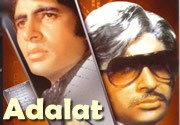
Adalat


Cast: Amitabh Bachchan, Neetu Singh, Waheeda Rehman
Director: Narendra Bedi
Genre: Drama
Play time: 02:31:10
release Year: 1976

Synopsis:

In the landscape of classic Bollywood movies, few films capture the duality of the human spirit quite like the 1977 drama Adalat. Directed by Narendra Bedi, this compelling feature stars the legendary Amitabh Bachchan in a dual role that showcases his immense range, alongside the grace of Waheeda Rehman and the effervescent charm of Neetu Singh. The film is a quintessential entry among iconic Hindi films, blending elements of crime, family tragedy, and the pursuit of justice within the complex framework of the Indian legal system. The story begins in a humble village, where Dharma, played by Amitabh Bachchan, leads a simple, hardworking life as a farmer. He is a man of integrity, deeply devoted to his wife, Radha, portrayed by the elegant Waheeda Rehman, and their young son. However, the serenity of their existence is shattered when local landlords and corrupt figures conspire to seize their land. Through a series of unfortunate and manipulative events, Dharma is framed for a crime he did not commit. This injustice serves as the primary catalyst for the film, forcing a man of peace to confront the harsh realities of a world where the law is often weaponized by the powerful against the vulnerable.

The plot thickens as Dharma is thrust into the gritty urban landscape of the city, desperate to clear his name and provide for his family. In a twist of fate that tests his moral compass, he becomes embroiled in the underworld, eventually rising through the ranks to become a formidable don known as Raju. This transition marks the emergence of the second facet of Amitabh Bachchan’s performance, as he sheds the innocence of the village farmer for the hardened, calculated persona of a crime lord. As Raju, he commands respect and fear, yet his heart remains anchored in the memories of the life he was forced to abandon. The narrative skillfully weaves the past and present, highlighting the internal conflict of a man who has traded his soul for the power required to survive in a corrupt society. Meanwhile, the film introduces Geeta, played by Neetu Singh, whose presence adds a layer of emotional complexity and romantic intrigue to the unfolding drama. Her character serves as a bridge between the different worlds Raju inhabits, challenging him to reconcile his criminal activities with the values he once held dear.

As the story progresses, the central conflict intensifies when Raju’s past and present collide in the most dramatic fashion. The authorities, led by persistent investigators, begin to close in on his operations, while his estranged family remains unaware of his true identity and his transformation into a powerful underworld figure. The film excels in building suspense, utilizing the high-stakes environment of Hindi movies to create moments of intense tension. The court of law becomes the ultimate stage for the resolution of these conflicts, reflecting the title Adalat, which translates to court. In these pivotal scenes, the film explores themes of redemption, the fallibility of justice, and the sacrifices made in the name of love. The courtroom sequences are not merely procedural; they are emotional battlegrounds where truths are laid bare and long-held secrets are finally revealed.

The resolution of the film is both poignant and thought-provoking, forcing the audience to reflect on the nature of morality and the long-term consequences of vengeance. As Raju faces the final reckoning, he must decide whether to continue his life of crime or seek a path of atonement that might cost him everything he has built. The performances by Amitabh Bachchan, Waheeda Rehman, and Neetu Singh elevate the script, grounding the more melodramatic elements of the plot in genuine human emotion. The film serves as a reminder of why Bollywood movies of this era continue to resonate with audiences; they combine star power with stories that grapple with universal themes of social injustice and personal integrity. By the time the final frames roll, Adalat stands as a testament to the storytelling prowess prevalent in classic Hindi films, leaving a lasting impression on anyone who appreciates a narrative that balances action with a deep, character-driven heart. It remains a definitive piece of cinema, capturing the essence of an era where every verdict delivered in the court of life carried the weight of a soul’s salvation.


Movie Review:

The landscape of 1970s Bollywood cinema is often defined by the emergence of the angry young man archetype, a persona that catapulted Amitabh Bachchan to superstardom and reshaped the industry’s narrative trajectory. Amidst this era of high-octane action and social rebellion, the 1977 film Adalat stands as a fascinating, albeit slightly uneven, testament to the versatility of its lead star. Directed by Narendra Bedi, the film attempts to weave a complex tapestry of crime, courtroom drama, and familial sentimentality. While it does not always succeed in balancing these disparate tonal elements with grace, it remains a significant watch for those interested in the evolution of the masala genre and the magnetic screen presence of its legendary cast.

The narrative of Adalat centers on Dharma, a simple, honest villager played by Amitabh Bachchan, whose life is upended by the cruel machinations of a corrupt system. When his family falls victim to local injustices, the protagonist is forced into a transformative journey that takes him from the pastoral innocence of his village to the gritty, unforgiving underworld of the city. As he navigates this transition, the film explores the classic trope of the protagonist adopting a dual identity to seek retribution. The screenplay is ambitious, attempting to provide a psychological justification for the hero’s descent into crime, yet it occasionally leans too heavily on convenient plot devices and coincidences that were staples of the era. However, the pacing is generally brisk, ensuring that the audience remains engaged even when the logic of the narrative begins to fray at the edges.

At the heart of the film is the performance of Amitabh Bachchan, who anchors the proceedings with a raw, visceral intensity. In the first half, he captures the vulnerability and moral rectitude of the rural Dharma with a subtle touch, shedding his typical screen persona to embody a character defined by simplicity. As the film progresses and he adopts the persona of the underworld figure, the transformation is marked by that trademark Bachchan charisma—the brooding eyes, the measured cadence of his dialogue, and the commanding physical presence that made him the undisputed king of Bollywood during this period. Opposite him, Neetu Singh delivers a performance that is both spirited and poignant. As the female lead, she brings a necessary lightness to the often grim proceedings, and her chemistry with Bachchan provides the emotional stakes that keep the audience invested in his journey. Waheeda Rehman, a veteran of immense gravitas, adds a layer of sophistication to the film. Her portrayal is nuanced, bringing a sense of dignity and tragic depth to her scenes, proving once again why she remains one of the most respected figures in Indian cinema.

The direction by Narendra Bedi shows a clear understanding of the visual language expected of a major production in the late seventies. The cinematography makes effective use of the contrast between the lush, open spaces of the village and the claustrophobic, neon-lit alleys of the city, visually reinforcing the hero’s moral and physical decline. While some of the camera work feels dated by modern standards, there is an undeniable aesthetic charm to the framing of the action sequences and the dramatic close-ups that emphasize the emotional turbulence of the characters. The soundtrack, composed by the legendary duo Kalyanji-Anandji, serves as an integral component of the storytelling. The songs are woven into the narrative fabric in a way that allows the characters to express their internal dilemmas, with the musical numbers shifting from folk-inspired melodies to more contemporary, rhythmic compositions that reflect the changing environment of the protagonist.

Thematically, Adalat delves into the perennial conflict between the law and justice, a subject that has long fascinated filmmakers across India, from the complex social dramas of Tamil cinema to the gritty realistic portrayals seen in Malayalam features. In the context of this film, the law is depicted as a rigid, often broken machine that fails the common man, leaving individuals with no choice but to take matters into their own hands. This exploration of vigilantism is a recurring motif in the films of the era, reflecting the deep-seated societal disillusionment with institutions. The film poses uncomfortable questions about whether a good person can remain righteous in a corrupt world, or if the pursuit of justice inevitably demands a sacrifice of one’s moral soul. While it does not offer profound philosophical answers, it effectively uses the courtroom setting as a stage for these existential debates, culminating in a climax that is both dramatic and emotionally resonant.

Despite its strengths, the film is not without its flaws. The secondary characters often lack the development afforded to the leads, serving primarily as plot catalysts rather than fully realized individuals. The comedy tracks, which were practically mandatory in films of that decade, sometimes feel intrusive and disrupt the tension that the director works so hard to build. Furthermore, the transition between the two halves of the protagonist’s life could have been handled with more narrative subtlety, as the jump from a naive villager to a hardened criminal feels slightly jarring. Yet, these shortcomings are overshadowed by the sheer commitment of the performances. It is rare to see a film that balances the star power of Amitabh Bachchan, the youthful energy of Neetu Singh, and the seasoned artistry of Waheeda Rehman so effectively, and their collective effort elevates the material beyond its conventional script.

Reflecting on the legacy of Adalat, it serves as a snapshot of a time when the star system was the primary engine of the film industry. The audience did not just go to the theater to see a story; they went to see their favorite actors inhabit larger-than-life roles that mirrored their own aspirations and frustrations. By this metric, the film is a success. It provides the entertainment value that viewers craved while touching upon themes that resonated with the collective consciousness of the public. It is a film that demands to be viewed not as a masterpiece of realistic cinema, but as a quintessential example of the dramatic storytelling that defined a generation of Indian moviegoers.

In the final analysis, Adalat is a compelling, if slightly flawed, piece of cinematic history. It benefits immensely from a stellar cast who bring humanity to a script that might have otherwise felt like a standard revenge drama. While it may not possess the tight plotting or technical precision of more contemporary works, its heart is in the right place, and its commitment to delivering an engaging, emotionally charged experience is evident in every frame. For fans of Amitabh Bachchan, it is an essential watch to see him navigate the complexities of a character caught between his innate goodness and the harsh demands of his environment. For those who enjoy the classic tropes and grand emotional arcs of vintage Indian cinema, the film offers a satisfying and immersive experience. With a balanced blend of drama, music, and social commentary, it stands as a reminder of the power of the star-driven narrative to captivate and move an audience. I would rate this film a 7 out of 10, recognizing its historical importance and the undeniable talent on display, while acknowledging the unevenness of its narrative execution.

Home
Movies
Contact Us
FAQ
terms and conditions
privacy policy
x
  • All Movies
  • Newly Added
  • Blue-Ray Releases
  • Subtitled Releases
  • Coming soon
  • New Releases
  • Mid Releases
  • Old Releases


  • Action
  • Adult
  • Adventure
  • Animation
  • Awards & shows
  • Biography
  • Classic
  • Comedy
  • Crime
  • Documentary
  • Drama
  • Family
  • Fantasy
  • Fiction
  • Foreign Movies
  • historical
  • Horror
  • Kids
  • Music Video
  • Musical
  • Mystery
  • Punjabi
  • Religious
  • Romantic
  • Short Film
  • Social
  • South Indian
  • Sports
  • Suspense
  • Thriller
  • TV Series
  • War


  • Prices / Rates
  • Free Movies
  • Blogs