
logo
[Login]   [Register]   [Contact Us]   [Watch on TV]
Home
Movies
Contact Us
FAQ
Watch on TV
[Login]   [Register]
  • All Movies
  • Newly Added
  • Blue-Ray Releases
  • Subtitled Releases
  • Coming soon
  • New Releases
  • Mid Releases
  • Old Releases


  • Action
  • Adult
  • Adventure
  • Animation
  • Awards & shows
  • Biography
  • Classic
  • Comedy
  • Crime
  • Documentary
  • Drama
  • Family
  • Fantasy
  • Fiction
  • Foreign Movies
  • historical
  • Horror
  • Kids
  • Music Video
  • Musical
  • Mystery
  • Punjabi
  • Religious
  • Romantic
  • Short Film
  • Social
  • South Indian
  • Sports
  • Suspense
  • Thriller
  • TV Series
  • War


  • Prices / Rates
  • Free Movies
  • Blogs
Drama

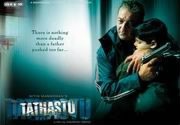
Tathastu


Cast: Sanjay Dutt, Amisha Patel, Jaya Prada, Amit Divetia, Gulshan Grover, Asrani
Director: Anubhav Sinha
Genre: Drama
Play time: 01:53:11
release Year: 2006

Synopsis:

A man who brings a child in this world, holds him while he takes his first steps and cries the first time his son smiles at him, can''t just can''t let that son slip away between his fingers into a dark and deadly silence. The man, Ravi (Sanjay Dutt), was only a factory worker. He was married to a middle-class homely girl, Sarita (Amisha Patel). He was only earning 5 thousand rupees a month. He was only another man in the crowd. But what the system didn''t factor was that he was a father. It''s not everyday that a healthy eight year old collapses while playing cricket. It''s not everyday that a healthy eight year old has a hole in his heart and needs a heart transplant. It''s not everyday that a factory worker has to raise lakhs of rupees to save his son''s life. But this was not everyday. And this was not an everyday father. It was an extra-ordinary day and an ordinary man rose to become an extra-ordinary father. He tried to do it the right way. Asking for help from his office, the insurance company, the loan sharks. But no one responded to his pleas while his son was not responding to medication. This desperate father kept a stone on his heart, a gun in his hand and grabbed the system by its horns to get his son a new heart. He held up the hospital waiting room. And laid out his conditions. The police did their best to talk him out of it. When talk didn''t work, their dirty minds did. But this father was determined. His wife, one doctor, one cop and million of ordinary people joined his battle. The one question the nation''s common folk was asking'' ''''Could this happen to us?'''' It had happened to Ravi, and Ravi was not asking question, he was giving answer. But it was far more complicated than it oppeared. Can a father beat the system with a gun and a heart full of courage? And once the politicians got involved, mess was bound to follow. And the media''s passion for mess and sensational software added to the dirty game. He was only a father who wanted a heart for his dying son. He was a simple man with a simple request. But when they turned him down, everything suddenly changed. He made his decision, looked up at the sky. Maybe he heard... God answer his prayer.

Movie Review:

The landscape of Indian cinema is frequently defined by its ability to oscillate between grand, escapist fantasies and gritty, grounded dramas that mirror the struggles of the common man. Within the expansive framework of Bollywood, there exists a persistent fascination with the archetype of the ordinary individual pushed to the brink of morality by an indifferent system. Tathastu, directed by Anubhav Sinha, attempts to tread this familiar yet emotionally volatile path. Starring Sanjay Dutt, Amisha Patel, Jaya Prada, Amit Divetia, Gulshan Grover, and Asrani, the film serves as a somber exploration of parental desperation and the ethical boundaries one is willing to cross when the state fails to provide. It is a movie that demands much from its audience, not in terms of spectacle, but in terms of emotional endurance, presenting a narrative that is as bleak as it is cautionary.

The story follows Ravi Rajput, portrayed by Sanjay Dutt, a man whose life is defined by the simple, earnest desire to provide for his family. Alongside his wife, played by Amisha Patel, and his young son, Ravi represents the archetypal middle-class patriarch. The catalyst for the film’s descent into darkness is a tragic medical diagnosis that leaves the family financially devastated and morally adrift. When the bureaucracy of the medical establishment and the cold apathy of the legal system offer no reprieve, Ravi is forced to confront the limits of his integrity. The screenplay, while undeniably earnest, leans heavily into the tropes of the social drama genre. It is a narrative that seeks to evoke righteous indignation, drawing inspiration from various survival-centric dramas that have populated the history of Indian cinema. However, the execution occasionally falters under the weight of its own message, as the pacing struggles to maintain the tension required for such a high-stakes premise.

Sanjay Dutt occupies the center of the frame for the duration of the film, and his performance is a study in restrained volatility. Known for his ability to embody characters with a deep-seated intensity, Dutt brings a weary, lived-in quality to Ravi Rajput. He avoids the typical heroics often associated with his persona, opting instead for a portrayal that feels burdened by the crushing weight of circumstance. Opposite him, Amisha Patel delivers a performance that anchors the emotional stakes of the film. As the mother watching her family disintegrate, she provides the necessary vulnerability that balances Dutt’s stoicism. The chemistry between them is understated, serving to highlight the domestic normalcy that is slowly being eroded by the unfolding tragedy. The supporting cast, including Jaya Prada, Amit Divetia, Gulshan Grover, and Asrani, add layers of texture to the world-building. Jaya Prada brings a dignified presence to her role, while Gulshan Grover and Asrani provide the necessary friction, portraying characters that represent the systemic obstacles Ravi must navigate.

Anubhav Sinha’s direction is characterized by a desire to keep the film grounded in a recognizable reality. The cinematography reflects this intention, utilizing a color palette that feels muted and utilitarian, stripping away the gloss often associated with mainstream Bollywood productions. There is a deliberate attempt to capture the claustrophobia of a middle-class existence, with tight framing in the interiors and a sense of encroaching darkness in the exteriors. The camera lingers on the faces of the actors during moments of silence, forcing the audience to sit with their grief and desperation. This aesthetic choice is effective in establishing the tone, though it does contribute to the film’s overall sense of melancholy. The soundtrack, while not necessarily the focal point of the narrative, serves its purpose by accentuating the emotional beats without overwhelming them. The music acts as a background pulse, underscoring the tragedy rather than providing an escape from it, which aligns with the director’s vision of a stark, uncompromising drama.

The central theme of Tathastu is the erosion of the social contract. The film poses a difficult question: what happens when a citizen, who has played by the rules their entire life, finds those rules weaponized against them? It explores the intersection of poverty, medical ethics, and the desperation of the individual. In many ways, the film functions as a critique of a society where empathy has been commodified and justice is reserved for those with the means to purchase it. While the film is a Hindi-language production, its themes echo sentiments found in various regional industries, including the hard-hitting social critiques often seen in the Tamil or Telugu film circles, where the plight of the common man frequently takes center stage in narratives of rebellion and survival. Tathastu attempts to capture that same spirit of righteous fury, although it remains more focused on internal collapse than on external revolution.

Despite its strong performances and clear thematic focus, the film is not without its flaws. The screenplay occasionally relies on repetitive sequences to drive home its point, which can lead to a sense of stagnation in the second act. The dialogue, while functional, sometimes leans too heavily into didactic exposition, stripping the audience of the chance to reach their own conclusions about the characters' choices. Furthermore, the transition from a domestic drama to a high-stakes thriller feels somewhat jarring, as the film struggles to reconcile its intimate character study with the demands of a plot-driven narrative. Yet, even with these uneven patches, the film succeeds in maintaining a consistent level of emotional engagement. It is a testament to the strength of the cast that the audience remains invested in Ravi’s journey, even when the narrative logic begins to fray at the edges.

In evaluating the film as a whole, it is clear that Tathastu is a project born out of a genuine desire to tell a difficult story. It is not a film designed for easy consumption or light entertainment. It asks the audience to look at the darker corners of the human experience and to consider the fragility of the structures we rely on for safety. Sanjay Dutt’s performance alone makes the film a compelling watch for those who appreciate character-driven drama, as he manages to convey a profound sense of loss with very little dialogue. The supporting performances add necessary nuance, ensuring that the world of the film feels populated by real people rather than mere archetypes. While it may not reach the heights of the greatest social dramas in history, it occupies a significant space as a reflection of the anxieties that plague the modern middle-class experience.

Ultimately, Tathastu is a somber, well-acted, and thought-provoking film that lingers in the mind long after the credits roll. It is a testament to the fact that even within the mainstream machinery of the film industry, there is room for stories that prioritize human emotion over spectacle. It is a flawed but deeply felt piece of work that succeeds in its primary objective: to make the audience feel the weight of a man’s choice when he is left with no other options. For those who appreciate cinema that tackles the complexities of the human condition with sincerity and gravitas, this film offers a substantial, if occasionally heavy, experience. It serves as a reminder that the most compelling conflicts are often not the ones fought on a battlefield, but the ones fought within the quiet, desperate confines of one’s own heart. Rating this film, one must acknowledge both its narrative ambition and its occasional structural shortcomings, leading to a final assessment of 6.5 out of 10.

Home
Movies
Contact Us
FAQ
terms and conditions
privacy policy
x
  • All Movies
  • Newly Added
  • Blue-Ray Releases
  • Subtitled Releases
  • Coming soon
  • New Releases
  • Mid Releases
  • Old Releases


  • Action
  • Adult
  • Adventure
  • Animation
  • Awards & shows
  • Biography
  • Classic
  • Comedy
  • Crime
  • Documentary
  • Drama
  • Family
  • Fantasy
  • Fiction
  • Foreign Movies
  • historical
  • Horror
  • Kids
  • Music Video
  • Musical
  • Mystery
  • Punjabi
  • Religious
  • Romantic
  • Short Film
  • Social
  • South Indian
  • Sports
  • Suspense
  • Thriller
  • TV Series
  • War


  • Prices / Rates
  • Free Movies
  • Blogs