

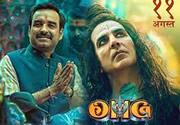
OMG 2
Synopsis:
Pankaj Tripathi's mustache in OMG 2 has this slight asymmetry to the left side that kept pulling my eye away from the courtroom drama during the first twenty minutes. Look, it’s a small thing, but it bugged me every single time the camera pushed in for a close-up on Kanti Sharan Mudgal ranting about sex education. Let's be honest, we have all sat through worse audio dubbing in mainstream Hindi films, yet something about the vocal match on the opposing counsel felt slightly out of sync right when the narrative engine needed to hum. Amit Rai directs with a heavy hand that sometimes mistakes volume for velocity, pounding the same moral nail with a mallet until the wood splits entirely. You can feel the sweat dripping off the screenplay every time a character turns directly to the audience to state the obvious thesis about traditional values versus modern necessity. Yet the movie somehow works despite its own clumsy scaffolding because the central performance grounds every single didactic speech in actual, lived desperation.
Akshay Kumar wandering through Ujjain as a divine messenger in bleached hair and a grey dhoti brings a weirdly relaxed energy to scenes that otherwise threaten to crush themselves under their own theological weight. He isn't playing a traditional deity with thunderbolts and booming voiceovers, opting instead for a bemused observer who looks mildly inconvenienced by human stupidity. Arun Govil as the temple priest carries a specific kind of old-school authority that makes you remember watching Doordarshan on Sunday mornings, bringing an inherent gravity that keeps the courtroom scenes from sliding straight into farce. Meanwhile, Yami Gautam delivers her legal arguments with a crisp, clipped articulation that contrasts sharply with Tripathi's rumpled, sweat-stained cadence, creating a friction that genuinely holds the screen together during the slower stretches. There is a scene where Tripathi just sits on a bench outside the courthouse, staring at a pigeon pecking at a stray piece of jalebi, and that silent three seconds tells you more about middle-class panic than three pages of dialogue ever could.
The cinematography relies heavily on drone shots of the Mahakaleshwar temple that feel lifted straight from a tourism board promotional video, complete with golden hour lighting sliding across stone lingams and crowds of extras surging toward the inner sanctum. It's functional, glossy, and completely anonymous, failing to capture any grit or texture in the alleys of Ujjain where the actual story breathes. The soundtrack is even worse, recycling the same three-note synth swell every time a character has an epiphany about societal hypocrisy, which happens roughly every ten minutes. Compare this sonic laziness to the sharp, period-accurate needle drops in Gangs of Wasseypur, where music actually tells you something about the dirt under the characters' fingernails instead of just telling you how to feel about a speech. Here, the background score behaves like an insecure parent hovering over a child's art project, terrified you won't notice the cleverness unless someone hits a bell.
Taboos around sex education in Indian households form the bedrock of the plot, though the film treats the subject with the cautious timidity of a school principal who has been summoned to the PTA meeting. It wants to be radical while simultaneously clearing every single scene past a hypothetical censor board in its own head, resulting in awkward euphemisms where straight talk is desperately required. The courtroom arguments circle around masturbation and adolescent biology like nervous teenagers at a bus stop, skirting the actual mess of human desire in favor of safe, sanitized talking points about constitutional rights. Bollywood movies have spent decades treating physical intimacy either as a joke or a crime, and while this script tries to push past those old boundaries, it keeps tripping over its own righteous modesty. You get long stretches of dialogue about the Kamasutra and ancient temple carvings, which feels like a very safe, academic way to discuss teenage biology without ever having to acknowledge modern reality.
The closing arguments stretch on for an absolute age, piling on emotional blackmail until even the most sympathetic viewer starts checking their watch. Tripathi delivers a final monologue that goes on for several minutes past the point where the jury would have logically checked out, hitting every emotional chord from national pride to parental guilt. There's no subtle fade-out or ambiguous lingering note to let the audience chew on the ideas independently, because the direction demands absolute closure on every single ideological front opened in the first act. It's exhausting in the specific way that message-driven cinema usually is when it forgets to be a story first and a lecture second. Still, watching Tripathi navigate the courtroom traps with that tired, stubborn shuffle makes the slog surprisingly tolerable right down to the final cut to black.