

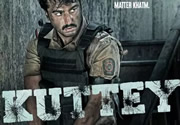
Kuttey
Synopsis:
Pandit is literally lying in the middle of a muddy highway clutching a briefcase full of dirty cash while everyone is just screaming at each other and shooting guns for no reason at all. Okay so Kuttey is basically this chaotic new entry into dark comedy bollywood movies that honestly didn't care about playing nice with standard audience expectations at all. Naseeruddin Shah plays this crooked cop named Narayan who's knee-deep in local politics and criminal syndicates out on the outskirts of Mumbai. Arjun Kapoor plays Gopal and Kumud Mishra plays Paaji and they are two crooked constables who are tired of getting underpaid and want a massive slice of the illegal pie. Tabu pops up as Pammi who is a fierce female cop with a mouth like a sailor and zero patience for anyone's nonsense. Radhika Madan plays Charkhi and Shardul Bhardwaj plays Harry and they're young, desperately in love, and somehow completely tangled up in this whole mess because Harry works for this local politician named Bhalerao who is played brilliantly by Ashish Vidyarthi. Konkona Sen Sharma also shows up later leading a bunch of Naxalite rebels living out in the forest who have their own completely separate agenda involving massive amounts of weaponry and money. Look, the whole plot kicks off because Narayan and his crew plan to hijack a cash van transporting crores of rupees belonging to some shady politicians. Gopal and Paaji want that money for themselves too. And then boom, multiple groups of greedy criminals, corrupt cops, and desperate revolutionaries all converge on the exact same lonely stretch of road on a rainy night to steal the exact same van.
Let us just talk about the background details for a quick second because nobody is mentioning the absolute state of this one specific background extra's ugly yellow sweater during the dhaba scene where everyone is plotting against each other over bad tea and greasy samosas. It’s got this weird knitted reindeer pattern that makes zero geographical sense in rural Maharashtra, and honestly, I couldn't stop staring at it while Arjun Kapoor was delivering some intense dialogue about trust and betrayal. Anyway, stuff happens and the alliances shift every five minutes because literally everyone is double-crossing everyone else in this movie. Gopal loves Charkhi, but Charkhi just wants to run away with Harry using stolen money, and Narayan is playing a long psychological game to protect his own skin, and Pammi is just trying to survive while shooting people left and right.
Right around the middle of the film we hit the interval block. The interval point happens right after a wildly confusing shootout where bullets are flying everywhere, characters are jumping out of windows, and suddenly there is a full-blown musical montage that honestly made zero narrative sense because half the main cast was bleeding out in a ditch just two minutes prior. Why do hindi movies always do this? You're gripping your seat watching a tense standoff and then bam, everyone's dancing in a neon-lit warehouse for three minutes before going right back to murder. It's wild.
After the break, the sheer greed of every single character reaches absolute peak levels. The cash van gets stolen, then unstolen, then hidden in a slaughterhouse, then tracked down by the Naxalites led by Konkona's character who want to use the funds for their armed struggle against the state. Hindi films love exploring the dark underbelly of systemic corruption, but Kuttey takes it to a totally different level by making every single protagonist a genuinely terrible human being. There are no heroes here. Even the young couple isn't innocent. They're just as ruthless and selfish as the veteran cops and politicians. And then, without warning, a major character gets shot right in the chest during a chaotic midnight ambush in the woods, completely flipping the power dynamic and leaving the remaining survivors scrambling to figure out who actually holds the combination lock to the briefcase.
Bodies start dropping left and right as the climax approaches because nobody trusts anyone. Gopal and Paaji turn on Narayan. Pammi turns on Gopal. The Naxalites show up to execute everyone in sight. Bullets rip through metal, mud, and flesh in a relentless sequence of absolute carnage that leaves the highway littered with bags of cash and dead bodies. In the final scene, Gopal manages to drag himself away from the horrific bloodbath, bleeding profusely, clutching a single remaining bag of money while laughing maniacally into the empty night air before he collapses permanently into the dirt.
There is a specific sound a rifle bolt makes when it jams in the middle of a muddy stretch near the outskirts of Mumbai that the sound design team of Kuttey clearly spent entirely too much time obsessing over, and honestly, it is the most memorable audio cue in a two-hour stretch of cinema that otherwise relies heavily on the kind of aggressive background score that makes you want to check your pulse just to ensure you are still alive. Vishal Bhardwaj has handed the directorial reins over to his son Aasmaan, which sounds like the setup for a nepotism lecture until you realize the younger Bhardwaj has inherited not just the keys to the kingdom but also the specific brand of chaotic grit that made Omkara such a filthy, beautiful mess sixteen years ago. Except this time, the Shakespearean grandeur is dialed way down and replaced with a low-to-the-ground, cynical farce about three separate gangs of desperate morons all trying to hijack the exact same van carrying three crores of unaccounted police money on a rainy, miserable night. You watch these characters scurry through high weeds and concrete drainage pipes like wet rats, and the first thought that crosses your mind is that somebody involved in this production really needed to take a long, hot shower and maybe drink some ginger tea.
Aasmaan Bhardwaj directs with a nervous energy that sometimes trips over its own shoelaces, staging long, rambling conversations inside cramped vehicle interiors where the camera refuses to settle down, constantly panning across greasy dashboards, stubbled cheeks, and nervously twitching fingers holding cheap lighters. The screenplay, co-written with his father, takes the classic Kaminey formula and strips it of whatever romanticism was left in those twin brothers, leaving behind a cynical landscape where nobody has a moral compass and everybody is just one bad decision away from bleeding out in a ditch. It is messy storytelling that refuses to hold your hand through the various double-crosses and shifting loyalties, which is refreshing until you realize that half the dialogue gets swallowed by heavy dialects and mumbled deliveries that make you wish for subtitles even when they are speaking your native tongue. We are supposed to care about these miserable excuses for human beings as they double-cross each other over duffel bags stuffed with cash, but the narrative keeps stalling out in endless loops of expositional shouting matches that go nowhere fast.
Tabu walks into this swamp wearing cheap sunglasses and a permanent sneer that suggests she has smelled something foul ever since she woke up this morning, and she dominates every single frame she occupies simply by refusing to play the scene the way you expect her to. She plays a corrupt cop who treats her subordinates like dirt and her superiors with casual contempt, tossing out threats with the same monotonous cadence one might use to order a cup of roadside tea. Arjun Kapoor, on the other hand, spends most of his runtime looking intensely confused while trying to anchor his face into a permanent scowl that struggles to mask the sheer exhaustion of carrying dialogue that feels three sizes too big for him. When he shares screen space with Naseeruddin Shah, who plays an aging gangster running a corrupt security agency with gravelly exhaustion, the age gap and the acting gulf yawn open like a crater, making Arjun look like a high schooler standing next to a professor emeritus of stagecraft. Konkona Sen Sharma shows up for about ten minutes of screen time and chews up the scenery with such ferocious glee that you spend the rest of the film wondering why the script didn't just follow her instead of the dreary collection of idiots we are stuck with. Radhika Madan and Shardul Bhardwaj bring a frantic, sweating desperation to their doomed young lovers subplot, though their scenes together tend to drag whenever the plot stops dead in its tracks to let them recite heavy-handed poetry about class warfare in modern India.
The cinematography by Farhad Ahmed uses a bruised, rain-slicked color palette that makes every location look like an industrial parking lot at four in the morning, which matches the tone if nothing else. Mud spatters the lenses. Headlights smear through greasy windshields. Vishal Bhardwaj handles the music department himself, delivering a soundtrack that leans heavily on jagged percussion and folk-inflected chants, though I could have lived without hearing the titular theme song blasted at full volume every single time a character pulls a gun out of their waistband. It is a small thing that bugged me all the way through the second act, this compulsive need to hammer home the dog motif with audio stings whenever someone barks or growls, as if the audience might forget the entire metaphor of the film if they aren't reminded every four minutes.
Hindi films have a long, storied history of exploring the criminal underworld through the lens of dark comedy, tracing a direct line from the slick con games of the seventies down to the rustic pulp fiction that has come to dominate certain corners of contemporary cinema. Kuttey clearly wants to sit at the cool kids' table alongside those gritty crime thrillers where nobody wears a white hat and the cops are just another gang with better stationery, but it lacks the narrative discipline required to pull off that kind of high-wire balancing act. The thematic ambitions are all there on the surface, shouting about how politicians, police, and petty thieves are all essentially scratching at the same garbage heap for scraps, but the movie says this so many times and with such blunt force that the social commentary starts to feel like a lecture from an uncle who has had two drinks too many at a family wedding. You get weary of the cynicism after a while because it stops being an observation about human nature and starts feeling like an aesthetic choice, a uniform every character has to wear regardless of whether it fits their personality.
The ending arrives not with a bang or a whimper, but with a messy, sputtering pile-up of bodies and cash that feels entirely improvised on the day of shooting. Nobody learns anything. No grand institutional corruption is overthrown. The survivors just pick up whatever money is left on the wet grass and walk away toward the horizon, leaving you to wonder what any of it was actually for besides giving a bunch of talented actors an excuse to sweat profusely in damp clothes for two hours.