

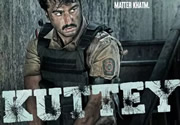
Kuttey
Synopsis:
In 2003, at a remote police outpost in Bhamragad, Maharashtra, Lakshmi Sharma is a Naxal captured by the police and is under custody of Inspector Viswapal Suri, known as Paaji. Paaji's superior officer slaps him for treating Lakshmi compassionately, then rapes Lakshmi in front of him. Her comrades soon come shooting bullets and swinging knives to free her.
In Mumbai in 2016, Mumbai Police officer Gopal Tiwari and Paaji are confronted by Narayan Khobre, a local politician and gang leader who is also a drug mafia kingpin, for giving away time to his rival drug supplier, Surti. Khobre forces them to finish off Surti. Gopal and Paaji attack Surti's rave party and kill him and his suppliers from Nairobi. Surti survives in a coma, and while escaping Surti's mansion, Gopal and Paaji are arrested by IPS Officer Rajiv Mishra for possession of drugs in their car. Rajiv rejects their claim that they were working undercover and suspends them.
The two officers approach Inspector Poonam Sandhu, known as Pammi, who is close to the Commissioner Of Police. She asks them to arrange for Rs. 1 crore each and in return, she'll get their suspension orders revoked. During the meeting, Pammi's friend Harry, a former cop who now supplies money to the ATMs in Mumbai and Navi Mumbai, mentions that his van carries Rs. 4 crore every night. Gopal decides to loot the van at an isolated spot in Navi Mumbai. He gathers help from some police officers, whose lives he had saved during an operation once. They set up a fake nakabandi check post to stop Harry's van.
Separately, Pammi learns from three arrested weapon makers about a driver for the cash van, and she intimidates Paaji into helping her loot the cash since she needs it to finalize her dream property. The driver is Mamu, who says that he is on leave for 1 week and if he returns to work on the day the van is hijacked, he will be the prime suspect. Pammi and Paaji find his replacement Ganesh in a chawl smoking weed and arrest him. But Ganesh falls on railway tracks and dies under an oncoming local train.
Meanwhile, Lovely Khobre is the only daughter of drug mafia kingpin Narayan Khobre, and she is engaged to marry a local real estate magnate's son. Lovely falls for one of the goons who work for her father, Danny. Their lives get entangled in the mess when they overhear Gopal hatching the plan to steal cash from a van. They feel that the money can help them elope, possibly to Canada.
On the night of the robbery, though Harry's men kill Gopal's colleagues and even injure Gopal, he manages to loot the money. A collision knocks Gopal unconscious, and Danny and Lovely take charge of the vehicle. When Pammi and Paaji stop the van, they are astonished to find Lovely inside. They cannot kill her as Narayan will set fire to the entire city. Gopal and Mamu also reach the van on their Scooty. Mamu is killed in the shootout. After a standoff, the survivors drop their weapons and find shelter at a dilapidated bungalow where they can sort out how the money will be divided.
By morning, the Naxals led by Lakshmi reach the area and the 3 groups decide to join forces against the Naxals. Paaji hopes he will be able to rescue them by making Laxmi understand their dilemma. Gopal finds machine guns stored in the bungalow and opens fire on everyone. Gopal murders Pammi, and before that, Pammi kills Lovely. Danny ends up killing the Naxals, and in retaliation, Laxmi kills Danny, and he kills her in the ensuing gunfire. As Gopal tries to run off with the money, Paaji goes to stop him but dies as a block of rock falls on him. An injured Pammi also tries to kill Gopal by blowing up a grenade, but he narrowly survives. Gopal is the only survivor, and he quickly hides all the boxes of money. The cash turns out to be worthless because the events take place in 2016, when India underwent a stage of demonetization.
There is a specific sound a rifle bolt makes when it jams in the middle of a muddy stretch near the outskirts of Mumbai that the sound design team of Kuttey clearly spent entirely too much time obsessing over, and honestly, it is the most memorable audio cue in a two-hour stretch of cinema that otherwise relies heavily on the kind of aggressive background score that makes you want to check your pulse just to ensure you are still alive. Vishal Bhardwaj has handed the directorial reins over to his son Aasmaan, which sounds like the setup for a nepotism lecture until you realize the younger Bhardwaj has inherited not just the keys to the kingdom but also the specific brand of chaotic grit that made Omkara such a filthy, beautiful mess sixteen years ago. Except this time, the Shakespearean grandeur is dialed way down and replaced with a low-to-the-ground, cynical farce about three separate gangs of desperate morons all trying to hijack the exact same van carrying three crores of unaccounted police money on a rainy, miserable night. You watch these characters scurry through high weeds and concrete drainage pipes like wet rats, and the first thought that crosses your mind is that somebody involved in this production really needed to take a long, hot shower and maybe drink some ginger tea.
Aasmaan Bhardwaj directs with a nervous energy that sometimes trips over its own shoelaces, staging long, rambling conversations inside cramped vehicle interiors where the camera refuses to settle down, constantly panning across greasy dashboards, stubbled cheeks, and nervously twitching fingers holding cheap lighters. The screenplay, co-written with his father, takes the classic Kaminey formula and strips it of whatever romanticism was left in those twin brothers, leaving behind a cynical landscape where nobody has a moral compass and everybody is just one bad decision away from bleeding out in a ditch. It is messy storytelling that refuses to hold your hand through the various double-crosses and shifting loyalties, which is refreshing until you realize that half the dialogue gets swallowed by heavy dialects and mumbled deliveries that make you wish for subtitles even when they are speaking your native tongue. We are supposed to care about these miserable excuses for human beings as they double-cross each other over duffel bags stuffed with cash, but the narrative keeps stalling out in endless loops of expositional shouting matches that go nowhere fast.
Tabu walks into this swamp wearing cheap sunglasses and a permanent sneer that suggests she has smelled something foul ever since she woke up this morning, and she dominates every single frame she occupies simply by refusing to play the scene the way you expect her to. She plays a corrupt cop who treats her subordinates like dirt and her superiors with casual contempt, tossing out threats with the same monotonous cadence one might use to order a cup of roadside tea. Arjun Kapoor, on the other hand, spends most of his runtime looking intensely confused while trying to anchor his face into a permanent scowl that struggles to mask the sheer exhaustion of carrying dialogue that feels three sizes too big for him. When he shares screen space with Naseeruddin Shah, who plays an aging gangster running a corrupt security agency with gravelly exhaustion, the age gap and the acting gulf yawn open like a crater, making Arjun look like a high schooler standing next to a professor emeritus of stagecraft. Konkona Sen Sharma shows up for about ten minutes of screen time and chews up the scenery with such ferocious glee that you spend the rest of the film wondering why the script didn't just follow her instead of the dreary collection of idiots we are stuck with. Radhika Madan and Shardul Bhardwaj bring a frantic, sweating desperation to their doomed young lovers subplot, though their scenes together tend to drag whenever the plot stops dead in its tracks to let them recite heavy-handed poetry about class warfare in modern India.
The cinematography by Farhad Ahmed uses a bruised, rain-slicked color palette that makes every location look like an industrial parking lot at four in the morning, which matches the tone if nothing else. Mud spatters the lenses. Headlights smear through greasy windshields. Vishal Bhardwaj handles the music department himself, delivering a soundtrack that leans heavily on jagged percussion and folk-inflected chants, though I could have lived without hearing the titular theme song blasted at full volume every single time a character pulls a gun out of their waistband. It is a small thing that bugged me all the way through the second act, this compulsive need to hammer home the dog motif with audio stings whenever someone barks or growls, as if the audience might forget the entire metaphor of the film if they aren't reminded every four minutes.
Hindi films have a long, storied history of exploring the criminal underworld through the lens of dark comedy, tracing a direct line from the slick con games of the seventies down to the rustic pulp fiction that has come to dominate certain corners of contemporary cinema. Kuttey clearly wants to sit at the cool kids' table alongside those gritty crime thrillers where nobody wears a white hat and the cops are just another gang with better stationery, but it lacks the narrative discipline required to pull off that kind of high-wire balancing act. The thematic ambitions are all there on the surface, shouting about how politicians, police, and petty thieves are all essentially scratching at the same garbage heap for scraps, but the movie says this so many times and with such blunt force that the social commentary starts to feel like a lecture from an uncle who has had two drinks too many at a family wedding. You get weary of the cynicism after a while because it stops being an observation about human nature and starts feeling like an aesthetic choice, a uniform every character has to wear regardless of whether it fits their personality.
The ending arrives not with a bang or a whimper, but with a messy, sputtering pile-up of bodies and cash that feels entirely improvised on the day of shooting. Nobody learns anything. No grand institutional corruption is overthrown. The survivors just pick up whatever money is left on the wet grass and walk away toward the horizon, leaving you to wonder what any of it was actually for besides giving a bunch of talented actors an excuse to sweat profusely in damp clothes for two hours.