

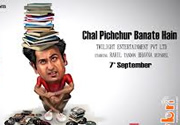
Chal Pichchur Banate Hain
vcdSynopsis:
Halfway through Chal Pichchur Banate Hain, Rahil Tandon is standing in the middle of a very dusty, completely chaotic street market trying to negotiate the price of a massive, aggressively bright yellow vintage boombox that honestly looks like it weighs about forty pounds and probably doesn't even work, but he's arguing with this grumpy old vendor about twenty rupees like his entire life depends on it. It is such a weirdly specific, lingering little scene that doesn't really push the narrative forward at all, and the camera just stays on this battered cassette player for a full minute while he taps it with a rusty screwdriver, and then boom, suddenly they're dealing with a massive production crisis involving a lost memory card and half the crew quitting. But to understand why he's even in that market barking at a shopkeeper, you have to look at how this whole messy journey started because it's typical of these indie-leaning experiments that try to carve out a niche in the usual sea of mainstream bollywood movies where everything is usually way too glossy and predictable.
So then we meet the main character who has this big, unrealistic dream of making a movie even though he doesn't have a single rupee to his name, and he's just hanging out with his equally broke buddies complaining about how hard it is to break into the industry. Bhavna Ruparel shows up shortly after as the female lead, and she's got this super distinct turquoise scarf that she wears wrapped around her neck in almost every single scene, and honestly it's kind of distracting because it looks fraying at the edges like she bought it at a thrift store during a monsoon, but she plays her part with this stubborn energy that bounces off the male lead pretty well. They decide they're gonna drop everything and make a feature film together against everyone's advice, which is a classic trope we've seen a hundred times before in hindi films where the underdog artists have to battle disapproving parents and empty pockets.
Right after that decision is made, they spend like twenty minutes showing them running around the city trying to find a camera that doesn't have a cracked lens, and they have this awkward meeting with a shady investor who smells like stale tobacco and offers them pocket change to change the entire script into a cheesy romance. They refuse his money because they're too proud, and then they're right back to sleeping on park benches and eating cheap street food while arguing about lighting angles. The financing falls through three different times and nobody wants to return their phone calls and the lead actress threatens to walk out because they haven't paid for her transit tokens. They keep going anyway.
Anyway, they finally scrape together enough random favors and borrowed equipment to start shooting guerrilla-style in public spaces without any permits, and that leads to this hilarious sequence where the local cops show up and chase them through a laundry alley while someone is still clutching the tripod. The dialogue gets super snappy here, with people shouting things like, just keep rolling the damn tape, even if we get arrested. They edit the footage on a laptop that randomly shuts down every ten minutes because the battery is totally fried, and they have to redo entire audio dubs in a noisy bedroom where you can hear the neighbor's goat bleating in the background.
The funny thing is that nobody outside their tiny circle actually believes they'll finish it, but they manage to piece together a rough cut that they sneak into a small independent screening room late at night. They sit in the back row sweating bullets while the projector makes this loud buzzing sound and the audience starts whispering. The film rolls its credits and the lights come on. Rahil Tandon stands up, walks to the front of the empty room, and quietly unplugs the projector from the wall.
That specific blue tint on the digital sensor always looks a bit cheaper than actual dusk, casting a cold wash over a scene that was supposed to feel warm and spontaneous. Chal Pichchur Banate Hain opens with that exact lighting choice, a hazy, slightly over-processed Mumbai afternoon where the shadows have been digitally lifted just enough to show you the grain. It's a small thing but it bugged me from the very first frame, setting a visual tone that feels less like a conscious artistic decision and more like a preset left on during post-production color grading.
Director Ishraq Shah isn't reinventing the wheel here, but he occasionally finds an interesting angle within a very tired template about young people trying to make a movie against the wishes of their families and the crushing weight of economic reality. The screenplay trips over its own feet whenever it tries to explain why these characters are so desperate to hold a camera, preferring generic shouting matches over actual dialogue about creative frustration. Characters talk in motivational posters most of the time. You get the sense that everyone involved wanted to make a heartfelt tribute to the sheer stubbornness of independent cinema in India, but the writing rarely grants the actors actual human thoughts, instead giving them plot points to yell at each other across messy apartments.
Rahil Tandon plays the lead protagonist with a kind of clenched, permanent intensity that starts to wear you down after the first forty-five minutes. He has this habit of widening his eyes whenever he delivers a line about following your dreams, which is fine for the cheap seats in a single-screen theater, but it plays terribly in medium shots where you can see every muscle in his jaw working overtime. Opposite him, Bhavna Ruparel brings a much quieter, occasionally effective exhaustion to the proceedings. She isn't doing anything revolutionary, yet she manages to anchor the more ridiculous screenplay beats simply by looking like she hasn't slept in three days. When they share a scene, the imbalance is glaring because Tandon acts like he is performing at the back of an auditorium while Ruparel acts like she is trying not to wake her roommates, and the film doesn't quite know how to bridge that gap between two entirely different acting schools.
There's a supporting character who runs a local tea stall and exists solely to dispense folksy wisdom about the nature of art, and every single one of his lines is visibly dubbed by someone standing three feet away from a studio microphone. It creates this bizarre disconnect where the visual grain of the street scene says chaotic gritty reality, but the pristine, echo-free audio says air-conditioned recording booth in Andheri. The soundtrack relies heavily on acoustic guitars strummed in minor keys to tell you when a character is feeling reflective, dragging out montage sequences that should take thirty seconds into three-minute emotional music videos. You can almost feel the editor stretching footage to fit the runtime of the songs, lingering just a beat too long on reaction shots of people staring pensively out of local train windows. Shah seems terrified of letting a scene breathe without a melody underneath it, as if the silence between lines might expose how thin the dramatic stakes actually are in this universe.
Hindi movies have a long and storied tradition of celebrating the struggle of the outsider, from Jaane Bhi Do Yaaro down to Luck by Chance, but those films understood the mundane humiliation of lack of funds rather than just treating it as a cool aesthetic choice for brooding youths. Here, poverty looks remarkably well-lit and clean, the kind of struggling artist existence where everyone somehow maintains immaculate haircuts and stylishly distressed denim despite being unable to afford a meal. The thematic ambition of the movie constantly outruns its practical budget, forcing the camera to stay tight in cramped interiors to hide the fact that they probably only had access to two locations for half the shoot. It lacks the messy, unpredictable energy of actual independent struggle, swapping raw observation for neat little narrative arcs that resolve themselves just in time for the next song to kick in.
If I'm honest, the whole enterprise feels stuck between wanting to be a gritty slice of contemporary Bollywood realism and a safe, comforting hangout movie for teenagers who spend too much time watching YouTube video essays about screenwriting. Tandon and Ruparel have decent enough chemistry when the script stops making them give speeches about passion and just lets them sit around arguing about whether to buy cheap equipment or pay rent, but those moments are too rare. The film drags its feet through a predictable third act where everybody learns a valuable lesson about compromise, leaving you with the distinct impression of a project that had decent intentions but forgot how to construct a scene that feels alive from the inside out.
At two hours, it outstays its welcome by at least thirty minutes, rolling past logical stopping points just to squeeze in one more subplot about parental disapproval that we already saw resolved in the first reel. You leave the theater thinking about that initial blue tint on the digital sensor and wondering why nobody told the crew that sometimes a simpler, less processed look tells a truer story than trying to make a low-budget indie look like an international streaming series.