

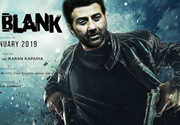
Blank
Synopsis:
Karan Kapadia is strapped to a hospital bed with a literal bomb ticking away inside his chest while Sunny Deol glares at him with the intensity of a man who skipped his morning chai and wants to strangle the entire universe.
Look, Blank is a wild ride, and honestly, we need to talk about Karan Kapadia making his debut in bollywood movies because nobody expected him to spend half the runtime looking completely terrified with surgical stitches near his heart.
So the movie actually starts with an amnesiac suicide bomber played by Karan who gets hit by a car in Mumbai, and get this, he can't remember his own name or why he's walking around with a remote-detonation device stitched into his flesh.
SS Rawat, played by the legend Sunny Deol with a permanent scowl and the loudest leather jackets in the entire history of hindi films, gets assigned to interrogate this poor guy who just keeps sweating and saying he has no clue about any terrorist cell.
Stuff happens, and Rawat doesn't trust him for a single second, which makes total sense because who casually carries explosives under their ribcage, but then they have to figure out who the mastermind is before the timer hits zero.
And then boom, we are thrown headfirst into a massive conspiracy involving a rogue terror outfit led by Junaid, and Karanvir Sharma is running around playing an ATS officer trying to piece together text messages and secret meetings while explosions go off every five minutes.
By the way, can we talk about that random extra in the police station scene who is literally wearing the ugliest, neon-green knitted sweater that completely distracts you from a very serious interrogation about national security?
Honestly, the pacing is all over the place, and right when the tension is peaking and everyone's yelling about ticking clocks, we suddenly get a completely random song and dance sequence that slows the entire narrative down to a crawl just because standard bollywood movies apparently cannot exist without a random musical break.
Then we slam right into the interval block where the bomb almost goes off, and you're sitting there eating your popcorn wondering how the writers even thought of this absurd plot twist.
After the intermission, Rawat takes the amnesiac kid out into the field to jog his memory, and they get ambushed by bad guys in an abandoned warehouse where chairs are flying everywhere and Sunny Deol just punches people through wooden walls without breaking a single sweat.
Turns out the terrorist organization planned to use multiple sleeper cells to bomb a massive public event in the city, and Karan's character was actually brainwashed into being a human time bomb, but his memory loss ruined their entire timeline.
Junaid calls him up and screams betrayal, and the poor kid has a massive emotional breakdown in a dirty alleyway while crying about his lost past and how he never wanted to hurt anyone.
Rawat catches up to him, they share a brief moment of gritty emotional bonding, and then they rush against time to find the main remote trigger before the signal reaches the vest.
They track the primary laptop down to a crowded rooftop, bullets start flying from every direction, Karanvir Sharma gets shot in the arm and falls behind a ventilation unit, and Sunny Deol has a massive fistfight with the main heavy while dangling over a ledge.
With seconds left on the digital display, Karan makes the ultimate sacrifice by running away from the rescue team to isolate the blast radius, slamming his own hands onto the detonator wire to short-circuit the mechanism just as the screen cuts to black and the credits roll.
The sound design in the opening five minutes of Blank is genuinely annoying, giving you this tinny, metallic clank every time a clock ticks that feels less like suspense building and more like someone hitting a radiator with a wrench. You sit there in the dark wondering if the theater's speakers are blown before realizing it is an artistic choice meant to put you right inside the head of an amnesiac suicide bomber who wakes up in a hospital bed with no idea why his chest is rigged to a detonator. It is a loud, blunt instrument of an entrance for a picture that rarely finds a gear lower than sixth. Hindi cinema loves a ticking clock, but usually, it waits until the interval block to start hitting the fast-forward button.
Behzad Khambata steps into the director's chair with the frantic energy of a man who just mainlined three espressos and needs to finish a story before his heart gives out, cutting between shaky-cam interrogation rooms and sun-bleached Mumbai streets with an editing suite that seems allergic to static shots. The screenplay, which he co-wrote with Pranav Adhyaru, treats geopolitical terrorism with the nuanced geopolitical depth of a comic book panel splashed in red ink, piling on double-crosses and secret agencies until the plot resembles a plate of overcooked noodles. You get these endless scenes of men in suits shouting at each other across conference tables about sleeper cells and imminent threats, and if I'm honest, half the time I couldn't tell which department was raiding which warehouse because every safe house looks like the exact same abandoned car park.
Then there is Sunny Deol, who lumbers into the frame wearing a permanent scowl that suggests he has spent the last decade reading nothing but tax forms and bad news, playing an ATS chief named SS Dewan whose primary acting method involves narrowing his eyes and delivering dialogue through clenched teeth. He doesn't stretch himself here, offering the exact same stoic law enforcement officer he has played in forty other bollywood movies, but there is still a weird comfort in watching him toss a villain through a wooden partition without breaking a sweat. He anchors the chaos around him simply by refusing to blink, holding the center of the frame even when the camera spins wildly around his head during a routine traffic stop.
Opposite him is Karan Kapadia, making his debut as the blank slate of the title, and the poor kid spends seventy percent of the running time looking like he just remembered he left the stove on back home. His performance relies entirely on wide-eyed confusion and damp hair, which works well enough when he is strapped to a hospital gurney and sweating through a beige hospital gown, but the moment he has to emote rage or confusion, the mechanics show. He reminds me a bit of Fardeen Khan in Prem Aggan, that same deer-in-the-headlights stillness where you can practically see the wheels turning in his head as he tries to remember his blocking. It is not an embarrassing disaster, exactly, but it lacks the greasy, unhinged energy you need to pull off a character who might accidentally blow up a train station.
The supporting cast features Karanvir Sharma as a junior officer who exists mostly to ask expository questions so the audience can catch up, delivering his lines with a breathless earnestness that makes him sound like he is reading live updates from a breaking news ticker. The cinematography by Savita Singh tries desperately to mask the low budget by bathing every single interior in aggressive blue and orange gels, turning standard government offices into neon-lit discotheques where national security seems to be managed entirely under mood lighting. It gets exhausting after forty-five minutes, this relentless need to make a Tuesday morning interrogation look like a techno music video shot in a rainstorm.
There is also a recurring musical cue, a heavy electric guitar riff that kicks in every time Sunny Deol walks into a room with his sleeves rolled up, and it played at least eight times by my count before the halfway mark. It is a small thing, sure, but it bugged the hell out of me because the sound mixer treated the guitar like a physical announcement, as if we might miss the fact that a burly man was entering the frame without a three-chord warning. Hindi films have long relied on background scores to do the heavy lifting of character introduction, but this particular needle-drop feels less like a theme song and more like a car alarm you cannot turn off.
Beneath the bluster of the counter-terrorism plot, the film wants to ask uncomfortable questions about radicalization and identity, touching on how young men get sucked into extremist networks through isolation and charismatic handlers. It scratches at the surface of these ideas during a series of blurry flashback sequences where Kapadia’s character is brainwashed in a dusty courtyard, but the movie is far too impatient to let those themes breathe for more than thirty seconds before cutting back to another fistfight. We get brief nods to the psychology of a living bomb, how a person becomes a weapon stripped of their own history, but these thoughts get trampled by the next mandated action sequence involving flying glass and slow-motion punches.
By the time the narrative stumbles into its messy, pyrotechnic climax on a rooftop, you feel less like you have watched a thriller and more like you have survived a two-hour workout class led by an aggressive instructor who really wants you to care about national borders. The picture runs out of narrative gas long before the final detonation, recycling the same three chase beats until the screen dissolves into a predictable freeze-frame that leaves the door wide open for a sequel nobody is asking for.