

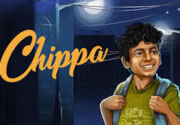
Chippa
Synopsis:
Chippa is running down a dark and freezing Calcutta street at midnight while clutching a crumpled piece of paper like his entire life depends on it, which honestly it kind of does, and he's just screaming into the empty air because he's a ten-year-old kid who's been dealt a wildly unfair hand by the universe.
Look, before we get ahead of ourselves with that wild midnight dash, let's back up a second because this whole indie drama thing directed by Safdar Rahman is not your standard run-of-the-mill blockbuster stuffed with cheesy dance numbers, though it still holds that unmistakable soul that makes great hindi films so special to watch on a rainy Tuesday.
Shayan Ahmed plays Chippa, this adorable little orphan kid living with his aunt and uncle in a tiny, cramped room filled to the brim with old junk, and on the eve of his tenth birthday—which is a massive deal because turning ten means he's finally old enough to get an official ration card and maybe figure out who he actually is—he finds a mysterious letter tucked inside an old coat that belonged to his long-lost father.
The handwriting is messy, the ink is fading, but the message is clear as day, stating that his dad is going to show up and find him on this exact birthday, so Chippa doesn't even hesitate for a single second before grabbing his favorite beat-up red taxi model and running out the door into the chaotic, neon-lit night.
And then boom, we hit the classic Bollywood movie structural rhythm where the narrative slows down just enough for a totally random musical interlude that hits you out of nowhere while Chippa is wandering through the alleys trying to decipher the cryptic clues left in the letter.
God, Masood Akhtar shows up as this weathered, kind-hearted old taxi driver who practically adopts the kid on the spot, and they're just driving around the empty streets of Calcutta talking about life and dreams and terrible past mistakes while the meter ticks away into the freezing dark.
Syed Aiman Ali pops in too, and they're having these wonderfully grounded street-level chats that make you forget you're watching a scripted movie because it honestly feels like you're eavesdropping on real people just trying to survive the night.
Stuff happens, they meet a stray dog, they share some cheap roadside tea, and Chippa refuses to give up his frantic search despite everyone telling him that the letter is probably just a stupid prank or a cruel ghost from the past.
Right around the interval point, Chippa's optimism starts clashing hard with the cold, brutal reality of his impoverished life, leaving him stranded near a closed tea stall with his shoes wearing thin and his spirit starting to crack just a little bit under the immense weight of growing up too fast in a city that doesn't care about orphans.
He's mumbling to himself, clutching the letter tighter and tighter, and the pacing gets super jagged here, shifting from long, quiet, lingering shots of empty brick walls to rapid-fire jump cuts of speeding cars and flickering streetlamps.
He meets a bunch of eccentric nighttime characters, including a guy who sells balloons and a night-watchman who dispenses bizarre philosophical advice, and none of them have actual answers, but they all push him one step closer to his inevitable destination.
Honestly, the sheer amount of detail they put into the background props—like this one ridiculously beat-up turquoise vintage radio sitting on a wooden crate that plays faint, scratchy old-school melodies throughout the entire second half—is just wild, because I stared at that stupid radio for five straight minutes wondering if it even worked.
Anyway, Chippa races across a massive bridge, his little legs pumping as fast as they can go against the howling wind, refusing to let his tenth birthday pass by without finding the closure he desperately craves from a father who left him behind years ago.
He finally reaches the exact address scribbled at the bottom of the faded paper, only to find a locked gate, an empty courtyard, and absolutely nobody waiting for him except for the cold morning breeze sweeping off the Hooghly river.
He drops to his knees in front of the rusted iron bars, tears finally spilling over his cheeks, and for a split second, it looks like this deeply emotional entry in the pantheon of modern hindi movies is just going to break our hearts into a million tiny, unfixable pieces.
Then he slowly stands back up, wipes his face with his sleeve, looks down at the red taxi toy clutched tightly in his small hand, and breaks into a wide, defiant grin as the morning sun finally breaks over the horizon.
He turns around, pops the toy taxi into his pocket, and starts walking briskly back down the empty street, ready to face whatever the rest of his life has in store for him without ever looking back once.
That one tracking shot of the yellow Ambassador taxi crawling past a row of shuttered shops while a stray dog barks off-screen feels like it was lifted straight out of an early Anurag Kashyap outtake, except the light is wrong. Not bad wrong, just flat, the kind of washed-out afternoon sun you only get in Calcutta during that miserable stretch between monsoon and whatever passes for winter down there. If I'm honest, I spent the first twenty minutes trying to figure out if the sound recordist had a cold because every ambient street murmur sounded like it was happening inside a tin can. But then young Shayan Ahmed looks directly into the camera with this half-cocked expression that isn't cute, thank God, and the movie suddenly finds its feet.
Safdar Rahmaan writes and directs with a patience that borders on stubbornness, refusing to juice the plot of Chippa with any manufactured urgency. The whole narrative takes place over the course of a single winter night when the title character, a ten-year-old runaway living with his uncle in a crumbling old printing press, receives an Urdu letter delivered by a postman who can't read it himself. He wants to know what it says. That is literally it. There is no ticking clock about rent or gangsters or missing parents, just a kid wandering through empty streets while the city sleeps off its curry and politics. Rahmaan frames these nocturnal wanderings with long, unhurried takes that let the background noise of the neighborhood breathe. You hear distant arguments from tenement windows and the distinct crunch of gravel under bare soles. The screenplay trusts that we will care about a boy walking three miles for a translation simply because the boy himself cares so intensely. It is a gamble that mostly pays off, even when the dialogue dips into that overly literary Hindi movies style that real kids from Dhapa definitely do not use.
Shayan Ahmed as Chippa carries the picture without ever falling into the trap of becoming a precocious movie brat who winks at the audience. He doesn't have that polished, stage-school sheen you see in most contemporary Bollywood offerings where the child actors look like they've spent three years in Mumbai commercial workshops learning how to cry on cue. When he scowls, he looks genuinely irritated, not photogenically forlorn. Masood Akhtar shows up as an aging scrap dealer who provides half an hour of respite, and their chemistry has this prickly, unforced quality that feels earned over years rather than scripted the night before. Syed Aiman Ali chips in with a supporting turn that gets weighed down by some clunky exposition about the partition of Bengal, but he manages to rescue his scenes by underplaying every single emotional beat. There's a moment near a tea stall where Ahmed drops a glass bottle, and his reaction—a split-second flash of panic followed by immediate indifference—is so specific and unactorly that I rewound it twice.
The cinematography by Mohana Krishna leans hard into neon greens and streetlamp ambers, turning a standard night-walk into something that looks occasionally painterly without feeling like a perfume commercial. You notice the dust motes dancing in the projector light of a closed cinema hall. You see the grease on the steering wheel of the taxi that picks him up halfway through his journey. It helps that the soundtrack avoids the usual trap of swelling string sections every time the kid looks sad, opting instead for a sparse, melancholic-adjacent ambient hum that sits underneath the dialogue without telling us how to feel. There is, however, this one recurring instrumental cue—a tinkling harmonium motif that sounds like a music box left in a damp basement—that repeats at least four times too many during the third act. It is a small thing, but it bugged me every single time it came back around.
What saves the film from turning into a standard-issue poverty-porn exercise is its total lack of condescension toward its characters. These people are poor, yes, but their lives aren't framed as a sociological study or a moral indictment of the municipal corporation. They are just trying to get through the night, fix a broken radio, or find a decent cup of tea before dawn breaks over the Hooghly. The central theme of identity attached to an unread language feels a bit like something cooked up in a screenwriting lab, but the actual execution is messy enough to feel human. Chippa is searching for a past he barely remembers in a city that is actively trying to demolish itself to make way for yet another glass-fronted shopping mall. Hollywood would have given him a wise old mentor who teaches him about life; this movie just gives him a tired old man who wants to close his shop and go to sleep.
We have seen this specific midnight-odyssey template before in independent Indian cinema, most notably in something like Salaam Bombay!, though Rahmaan lacks Mira Nair's raw documentary bite. He prefers fable to fact, turning the dark alleys of Calcutta into a storybook where stray dogs act like minor deities and strangers hand out stale biscuits with the solemnity of priests. It's an uneven film that occasionally drags its feet when the narrative threatens to stall out entirely in the middle of a conversation about old newspapers. But Ahmed's face in the final close-up, illuminated only by the pale blue light of a breaking dawn that promises nothing better than yesterday, justifies the wander. He doesn't smile. He doesn't cry. He just sits on the curb and waits for the tram to start running.