

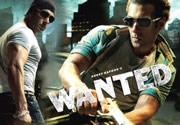
Wanted
Synopsis:
Prakash Raj screams way too much in the second half of Wanted, and honestly, it works. He plays Gani Bhai with this screeching, vein-popping intensity that makes you forget you are watching a man who basically recites every dialogue as if someone just replaced his coffee with Red Bull. Prabhu Deva directs this thing like he is trying to outrun a pack of wolves, cutting between slow-motion entries and fast-forward action beats with zero regard for whatever logic was allegedly present in the original Telugu script Pokiri. Hindi movies usually spend at least forty minutes establishing why their protagonist is a cynical rogue with a heart of gold, but Salman Khan skips that formality by simply walking into a frame with his hair gelled into submission and sunglasses that cost more than a mid-sized apartment in Thane. He plays Radhe, a hitman for hire who operates in a Mumbai that feels entirely air-conditioned, populated by people who exist solely to get punched through wooden tables or to look bewildered while standing behind him in wide shots.
Ayesha Takia plays Nirjara, a middle-class girl living in a perpetually beige tenement who gets harassed by a local goon named Talpade played by Mahesh Manjrekar with the greasy enthusiasm of a man who genuinely loves being cast as the sleazebag. If I am honest, Takia spends about half her screen time looking like she is waiting for someone to bring her a lukewarm chai and the other half crying over Salman stealing her dupatta or buying her samosas. The romance between them is less an evolution of feelings and more a series of contractual obligations that must be fulfilled before the next shoot-out can commence. There is a supporting cast of heavy hitters like Vinod Khanna and Om Puri who show up in various states of enthusiasm, mostly furrowing their brows and talking about duty and family in rooms that lack any recognizable furniture. Sayaji Shinde pops in as a corrupt commissioner with a facial tick that comes and goes depending on whether the camera is close enough to capture it. Anil Kapoor does not appear in this film at all, which is a common misconception among people who mix up their late-noughties mass-action posters, but you do get Aseem Merchant chewing the scenery as a rival gangster who exists purely to be thrown through a pane of tinted glass.
The cinematography relies heavily on high-contrast lighting that turns every skin tone the color of a bruised peach and makes night scenes look like they were shot inside a very clean washing machine. Whenever Radhe beats up a dozen men in a dirty alleyway, the color grading shifts to a sickly blue-green that screams early two-thousands digital intermediate experiments. Sajid-Wajid's soundtrack hits you over the head with the subtlety of a falling brick, particularly during the club numbers where Salman does that weird shoulder-shake dance that somehow became a cultural phenomenon despite looking completely improvised. It is a small thing, but the audio mix on the punches keeps lagging half a frame behind the actual impact, which drives you insane once you notice it. You watch these fight sequences not because they display any real choreography, but because they represent a specific era of Bollywood where stars still commanded the frame through sheer physical presence rather than wire-work and forty different angles of CGI enhancement. The narrative structure collapses entirely around the hour-and-half mark, abandoning even the pretense of a plot about underworld cartels to focus exclusively on how many sunglasses Salman can break while glaring at Prakash Raj across a dusty warehouse floor.
There is an underlying theme about the state cleansing itself through extreme violence, though calling it a theme feels generous given that the moral framework is basically just an excuse to let Salman beat up corrupt policemen and drug lords without ever getting his white shirt properly stained. Hindi cinema has always had a soft spot for the vigilante who operates outside the law because the law is too busy taking bribes, and Wanted fits right into that lineage without offering any new perspectives on police corruption or urban decay. The villains are cartoonish monsters who do terrible things so that when Salman finally kicks them through a corrugated tin roof, you cheer out of pure kinetic relief. Aseem Merchant gets killed off so quickly you almost forget he was in the movie, which is probably for the best since his primary contribution was shouting threats in a leather jacket that looked two sizes too small. You leave the theater or turn off the screen with your ears ringing from the background score and your brain slightly scrambled by the sheer volume of editing cuts used during simple conversations. It is a loud, messy artifact of a transitional period for commercial cinema, before everything got smoothed out into slick, algorithmic franchise-building, and sometimes watching a movie that relies entirely on a famous man glaring at a wall is preferable to watching twelve people discuss tax policy in a boardroom.