

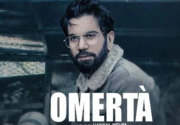
Omerta
Synopsis:
God, let's back up a bit because the film actually starts in London with Omar living this seemingly normal life before getting radicalized by militant groups, and Rajesh Tailang shows up as his frantic, worried father who is just constantly trying to fix his son's mess of a life while Omar gets kicked out of universities and moves to Pakistan to join terrorist training camps, which is wild because you watch this transformation happen in these gritty, sweat-drenched scenes where he learns how to handle weapons and hates everyone who isn't extreme enough for him.
And then boom, he's in India on fake British passports, setting up a kidnapping ring with three other guys in a dingy apartment in Delhi, and they grab foreign tourists just to blackmail the government into freeing jailed militants, which brings us right up to the interval block where the tension is so thick you could cut it with a knife and everyone in the audience is just staring at the screen wondering how much worse things can possibly get before the intermission hits you like a truck.
Satwant Kaur plays his mother in these brief phone calls and background moments, but let's be real, the movie doesn't care about family warmth or emotional breathing room because it's way too busy rushing through the actual 1994 kidnappings where Omar and his crew lock up Americans and Britons in tiny, filthy rooms while the police stumble around cluelessly, and oh god, there is this one random background extra carrying a yellow plastic bucket in the Delhi safehouse scene who is wearing the ugliest, most aggressively striped brown sweater you have ever laid eyes on in any modern hindi movie, and I spent way too much time staring at that stupid sweater instead of focusing on the horrific psychological torture happening right next to him.
Stuff happens so fast after the break that you barely have time to breathe, and before you know it, the Indian police raid the hideout, capture Omar, and throw him in prison where he just sits there scheming and refusing to repent for a single second of the pain he caused.
Years pass in a flash of bad hair days and prison transfers, and then the 1999 Indian Airlines Flight 814 hijacking happens, and the Indian government is forced to release Omar along with two other high-profile terrorists in exchange for the hostages, so he walks out of jail a free man and boards a flight to Kandahar.
And honestly, unlike typical bollywood movies that love a neat little redemption arc or a happy ending, Omerta just throws you straight into the grim reality of history because we watch Omar travel back to Pakistan where he is hailed as a hero by extremist handlers, and then he immediately starts planning his next atrocities including the horrific 2002 kidnapping and murder of Wall Street Journal reporter Daniel Pearl.
The movie doesn't try to make you sympathize with him at all, which sets it apart from a lot of standard hindi films that always try to find some tragic backstory excuse for the bad guy, because here he's just cold, arrogant, and viciously unapologetic right up to the end credits.
We watch Omar walk down a sun-bleached street in Karachi, his face twisted in a smug, self-satisfied sneer as he blends back into the local crowd to orchestrate more bloodshed, and the screen just cuts abruptly to black without any warning or uplifting musical cue.
Rajkummar Rao sweats a lot in this movie, which is fine, because London in the nineties wasn't especially air-conditioned for students of Pakistani origin living on welfare and plotting mass murder. Hansal Mehta directs this thing like a documentary shot by someone who keeps dropping the camera in the dirt, refusing to give you the satisfaction of a clean narrative arc or a likable protagonist you can root for during the intermission. You get Omar Saeed Sheikh straight out of the box, an upper-class British kid who went to the London School of Economics, got radicalized by footage from Bosnia, and decided that the only reasonable response to global politics was kidnapping tourists and cutting throats for Jaish-e-Mohammed. If I'm honest, the first twenty minutes move with such a blunt, unvarnished ugliness that you almost expect the projectionist to apologize for the mess he's rolling out on the screen. It is not an easy sit. The screenplay, credited to Mukul Dev and Mehta based on a story by Sameer Gautam, skips all the usual origin-story hand-wringing where a mentor figure tries to save the boy's soul before he crosses the line. Omar doesn't have a crisis of conscience. He doesn't stare into a mirror and wonder if he's the bad guy. He just listens to cassette tapes of sermons in his dingy bedroom, calls his mother to lie about his university exams, and boards a flight to Pakistan with a cold, dead-eyed certainty that makes your stomach turn. The direction doesn't aestheticize the violence, either; there are no slow-motion gunfights or swelling orchestral stings to tell you how to feel when a tourist gets his throat slit in a cramped hotel room in Delhi. It feels more like watching a badly kept surveillance tape from a police archive that somebody forgot to burn before the department got investigated for corruption.
Rajesh Tailang pops up as a Pakistani intelligence officer who looks like he hasn't slept in three weeks, bringing a weary, bureaucratic menace to scenes that could have easily drifted into cartoonish villainy. It is a small thing, but it bugged me how the sound design keeps dropping the ambient room tone whenever Rao speaks in Urdu, leaving his dialogue floating in an artificial vacuum that betrays the ADR booth. Satwant Kaur plays Omar's mother with a quiet, devastating realization that her son has turned into someone she wouldn't even let through the front door, though she gets barely three scenes to register the shock of it all. Rao himself sheds every ounce of the affable, nervous-energy charm that made him a star in smaller comedies, replacing it with a greasy, arrogant posture and a clipped British accent that sounds like he swallowed a dictionary of political grievances. He holds his chin at a weird angle throughout the entire second half, projecting an obnoxious, untouchable self-regard that makes you want to reach into the frame and slap him across the face. This isn't the kind of transformation where an actor gains fifteen pounds and wins an award; it's an exhausting, twitchy immersion into a fanatic who genuinely believes his own press clippings. You saw something similar when Irrfan Khan played the quiet zealot in The Namesake, though Mehta's film has zero interest in domestic warmth or immigrant longing. Omar doesn't love anyone, least of all the causes he claims to bleed for, and Rao never once tries to humanize him with a rogue smile or a moment of accidental grace. He stays repellent from the first frame to the last.
The cinematography by Anuj Rakesh Dhawan relies heavily on natural light that looks harsh and unflattering, turning every safehouse in Lahore and every dingy Delhi motel into a claustrophobic box where nobody can breathe properly. There is no score to speak of for long stretches of the runtime, just the hum of cheap refrigerators, traffic noise from outside closed windows, and the occasional burst of a distorted radio broadcast reporting on the 1999 Kandahar hijacking. That hijacking sequence forms the emotional core of the second hour, and Mehta films the negotiations with a grinding, procedural boredom that mimics the actual bureaucratic nightmare of dealing with state-sponsored terrorism. It lacks the propulsive, popcorn-munching gloss of recent patriotic thrillers coming out of the standard commercial machinery of mainstream hindi movies, choosing instead to linger on the exhausted faces of bureaucrats drinking lukewarm tea from paper cups while planes sit on distant tarmacs. The edit cuts abruptly from scene to scene without narrative padding, sometimes dropping you into the middle of a interrogation room or a dusty street corner without establishing shots to tell you where you are or what day of the week it is. It forces you to keep up. Some scenes end mid-sentence, the audio dropping out just as a character is making a point about Kashmir or the ISI, which gives the whole enterprise a jagged, unfinished texture.
We are a long way from the glossy, song-and-dance numbers that used to define standard bollywood fare, though critics who talk about this project as some kind of radical break from tradition tend to forget that parallel cinema has been doing gritty character studies since the seventies. Still, the complete absence of a moral compass makes this a genuinely uncomfortable viewing experience, primarily because Mehta refuses to offer a counter-perspective or a heroic cop who steps in to save the day at the eleventh hour. Omar goes to prison, he gets released in exchange for hostages during the IC-814 swap, and he walks out of an Indian jail with a swagger that makes you want to throw something heavy at your television screen. The film doesn't explain how a guy like that walks among us with impunity, nor does it attempt to diagnose the broader geopolitical sickness that created him. It just shows you the gears grinding. The dialogue avoids speechifying, which is a minor miracle given the subject matter, relying instead on mundane logistics about plane tickets, forged passports, and the price of cheap hotel rooms in Paharganj. When Omar talks about jihad, he sounds less like a holy warrior and more like a middle-management accountant explaining a spreadsheet to a skeptical boss. That banality is probably the scariest thing about the entire project, because it strips the violence of any pseudo-romantic mythology and leaves you staring at a pathetic, angry man with a knife.
There is a sequence near the middle where Omar wanders through a crowded bazaar in Lahore looking for a contact who never shows up, and the camera just follows his back for three unbroken minutes through a sea of indifferent pedestrians who don't know him and don't care. It’s an effective moment that anchors the character in a real physical space rather than just a political abstraction. Then the film cuts abruptly to a gloomy interrogation room where a minor functionary is reading a newspaper, and the momentum dies completely for about ten minutes before picking up again with the planning of the Wall Street Journal kidnapping. That uneven pacing is typical of how Mehta works when he’s chasing a specific mood rather than a clean dramatic arc. You take the rough with the smooth, or in this case, the dull stretches of bureaucratic phone calls alongside the sudden, stomach-churning bursts of violence. It is worth noting that the film ran into massive trouble with certification boards before its release, which probably explains why certain plot points involving state complicity feel slightly blurred around the edges, as if someone took an eraser to the margins of the script just to keep the project from getting permanently shelved. Whatever the reasons behind those compromises, the result is a jagged, unpleasant piece of work that stays in your head long after you've turned off the screen, mostly because it refuses to offer the cheap comfort of a moral conclusion or a satisfying punishment for the guilty.