

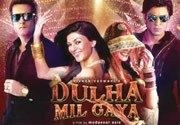
Dulha Mil Gaya
Synopsis:
Fardeen Khan’s hair in the opening reels of Dulha Mil Gaya has a strange, lacquered independence that demands immediate attention before anything else on screen can even register. Mudassar Aziz directs this 2010 romantic comedy with the frantic energy of someone trying to catch a flight they are already twenty minutes late for, rushing through setups that needed room to breathe. The screenplay is structured around a bizarre inheritance clause that forces a playboy to marry before he can touch his grandfather’s millions, which is a plot device that felt dusty back when David Dhawan was churning out hits on a bi-monthly schedule. If I'm honest, the whole thing creaks right from the first scene, relying on narrative scaffolding that should have been retired alongside the pager. Cinematographer Anil Dahiya shoots everything in that bright, flat digital video style that defined a certain era of mid-budget Hindi movies, giving even upscale Caribbean locations the sterile look of an airport duty-free shop.
Sushmita Sen sweeps through this mess in structured gowns and towering heels, playing a high-powered businesswoman with a brisk authority that briefly tricks you into thinking you are watching a much better movie than you actually are. She plays Shimmer—yes, that is her name, and no, the film never stops finding ways to pun on it—with an unwavering commitment that borders on heroic, especially when she has to deliver lines about the true meaning of partnership while standing in what looks like a hotel lobby rented for four hours. Fardeen Khan, meanwhile, plays Dons like a man who checked out emotionally during the first costume fitting, shuffling through his scenes with a perpetual half-smile that suggests he would rather be literally anywhere else. Ishita Sharma gets the thankless task of the sweet, homely foil who transforms into a modern woman through the magic of a haircut and a shopping montage, a tired trope that feels particularly egregious here because the poor actress is trying so hard to inject some genuine vulnerability into the proceedings. Then there is Johny Lever, who shows up to do a bit involving mistaken identity and a fake accent that feels dropped in from a completely different decade of Hindi cinema, dragging the pacing to a dead halt every single time he opens his mouth.
There's a supporting character played by Vivek Vasvani who constantly adjusts his glasses with a theatrical click, and after the third time it happens in the same conversation, it becomes the only thing you can look at in the frame. Lalit Pandit's soundtrack delivers a couple of catchy numbers, particularly the title track which features a fleeting cameo from Shah Rukh Khan that generates more electricity in three minutes than the two male leads manage across the entire runtime. Yet the background score swells with aggressive insistence at moments that call for quiet, telling the audience how to feel because the actors simply cannot manage it on their own. The editing by Sanjay Sankla chops scenes off at the ankles just as they might be developing some rhythm, leaving dialogue dangling mid-breath as we cut instantly to a wide shot of a yacht or a corporate boardroom that looks suspiciously like a studio set with a rented plant.
This is a movie deeply obsessed with the mechanics of wealth, throwing around references to global conglomerates and private islands as if sheer proximity to luxury can substitute for actual character motivation. The thematic core attempts to argue that love matters more than a fat bank account, which is a hilarious message coming from a production that spends ninety percent of its budget on shiny cars, glossy locations, and designer wardrobes that look like they were bought off the rack at a mall in Dubai. We are supposed to buy into this transformation where the superficial hero learns the error of his ways, but the script rushes the epiphany so fast that it feels like a mandatory administrative hurdle rather than a genuine change of heart. It belongs to that peculiar sub-genre of romantic comedies that try to mimic the breezy, high-society gloss of Kal Ho Naa Ho without possessing a fraction of the emotional intelligence or structural patience required to pull it off.
By the time Shah Rukh Khan delivers his late-film monologue about the sanctity of marriage—a speech that feels entirely inserted to justify his name on the poster—you realize how hollow the preceding two hours have been. Dulha Mil Gaya is not an outright disaster, but rather a remarkably empty object, a collection of expensive clothes and pretty faces arranged in front of a camera that doesn't seem to care why any of them are moving. It limps across the finish line with a song and dance number that tries to convince you everyone is now one big happy family, though the forced grins on the cast members tell a slightly different story.