

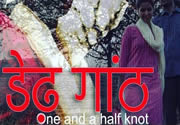
One and a Half Knot
Synopsis:
Look, let's back up a second because before we get to the screaming and the flying cups, the movie actually starts with this weirdly quiet, lingering shot of a ceiling fan spinning way too fast in a cramped Delhi apartment where nothing makes sense.
Farkhan Khan plays this super awkward guy named Kabir who spends the first twenty minutes of the runtime staring intensely at cheap shoes and mumbling his lines like he's trying not to wake up his roommates, and then Ankit Satti rolls up in a shiny, incredibly tacky blue sedan that looks like it belongs in a totally different genre of hindi films altogether.
Stuff happens so fast your head starts spinning, because Kabir and Shruti's character are suddenly getting hitched in this rushed, sweaty, deeply uncomfortable ceremony where nobody looks happy, especially the uncle in the back row wearing a neon green sweater that honestly deserves its own IMDb page because it is so aggressively ugly it hurts my eyes.
And then boom, the wedding isn't even fully finished, papers are half-signed, rituals are weirdly botched, and they're already fighting over who forgot to book the catering van while the camera spins around them like the director just discovered the zoom lens button for the very first time.
Honestly, the pacing in these types of hindi movies gives me whiplash, because one minute they're having this devastating, heartbreaking conversation about familial expectations and broken promises, and the next thing you know, there's a full-blown musical number that comes completely out of nowhere with backup dancers holding giant pink umbrellas for no discernible reason.
Like, why are there umbrellas? It isn't even raining in the scene.
God, the interval point hits right when Kabir drops a bombshell secret about his actual financial situation involving a sketchy real estate scam and a bag full of borrowed cash, and right as the screen cuts to black, Shruti Rai stares directly into the lens with this look of absolute, unadulterated betrayal that had me actually dropping my popcorn on the floor.
After the break, the plot just completely goes off the rails into pure madness.
Ankit Satti's character comes back into the picture waving a legal notice around while yelling something about a cancelled contract, and suddenly everybody is running through narrow alleyways while dodging stray dogs and motorbikes.
There's this one bizarre editing choice where they replay the same car crash sequence from three different angles with different sound effects each time, and I still don't know if it was a profound artistic statement about memory or just a massive editing room mistake left in to pad out the runtime.
Character motivations change on a dime because Kabir suddenly decides to pack a single suitcase with two mismatched socks and a half-eaten bag of potato chips, muttering, "We have to leave now," right before everything falls apart completely.
Secrets get spilled left and right in this loud, messy kitchen argument where nobody is listening to anybody else, and the dialogue is just overlapping screams of pure panic about mortgages and social status.
We rush through a massive, life-altering plot twist where the entire premise of the marriage turns out to be based on an elaborate lie concocted by Ankit Satti just to win a petty family feud over a disputed plot of land.
And then we are barreling straight toward the climax of this weird little entry into contemporary bollywood movies where nobody gets a clean redemption arc and everyone just looks tired of running.
Shruti Rai walks out of the apartment building without looking back at Kabir, her heels clicking loudly against the concrete pavement as the grey Delhi smog settles over the street.
She drops the remaining half of the torn wedding invitation into an open puddle, steps right over it, and gets into a waiting auto-rickshaw without saying a single word.
Shruti Rai’s coat smells like damp wool in the third scene of One and a Half Knot, and for some reason that detail stayed with me longer than any of the dialogue. It is a small thing, completely divorced from plot mechanics or emotional arcs, but it anchors the film in a physical reality that most contemporary hindi films actively avoid in favor of sterile digital grading. Directorially, the project refuses to give you the easy comfort of a wide establishing shot when people are arguing, preferring instead to shove the camera so close to the back of someone’s neck that you can count the stray hairs coming loose from a cheap elastic band. This claustrophobia isn't an accident. It's an aggressive stylistic choice that makes you feel like an uninvited guest sitting too close to a domestic dispute in a cramped housing colony apartment.
The screenplay, credited to a writers' room that probably consumed too much bad instant coffee, has a habit of letting scenes run four beats past where they should have cut to black. There is an argument in a kitchen involving Farkhan Khan and a half-eaten container of yoghurt that goes on so long you start checking your watch, wondering if the projector jammed, only for the characters to suddenly pivot into a conversation about property tax that completely reframes everything you thought you knew about their marriage. That kind of patience is rare in modern Hindi cinema, where editors usually slash scenes to ribbons to maintain a perceived momentum, but here it works because it forces you to sit in the uncomfortable silence between sentences where real bitterness festers.
Farkhan Khan plays the kind of exhausted, middle-management nobody who usually only exists in stories to get pushed around by more charismatic protagonists, but he invests the role with a bruised, pathetic stubbornness that avoids caricature. He never once raises his voice when he should, choosing instead to swallow his anger until his jaw muscles twitch, which is far more terrifying than any shouting match. Ankit Satti shows up halfway through as the brother-in-law with questionable business ventures and a too-tight leather jacket, and honestly, the dubming on his voice in the second reel is so out of sync with his mouth movements that it pulls you right out of the room. It’s a minor technical oversight, but when a film relies so heavily on naturalistic tension, a poorly synced ADR line feels like someone blowing an airhorn in a library.
Rai, however, holds the entire chaotic structure together with a performance that reminds me of Isabelle Huppert in La Cérémonie, possessing that same unnerving ability to look completely calm while a fire is burning behind her eyes. She doesn't have many big emotional monologues where she gets to explain her trauma to the audience, and thank God for that, because too many bollywood movies treat screenwriting like a series of TED Talks where characters articulate their inner pain with clinical precision. Instead, Rai communicates volumes through how she holds a teacup or how long she hesitates before answering a phone call from her mother.
The cinematography by the department in charge of visuals uses natural light in a way that feels dirty rather than poetic, finding grease smudges on light switches and dust motes suspended in the stale air of poorly ventilated hallways. There is no soaring orchestral score telling you when to feel sad for these people, just a persistent low-frequency drone that sounds like a refrigerator dying in an empty kitchen at three in the morning. When music does appear, it is usually coming from a cheap transistor radio playing a scratchy old track that gets abruptly cut off when someone slams a door, denying you the catharsis of a complete melody.
Class resentment and the suffocating pressure of familial obligation form the backbone of the narrative, but the film treats these ideas as living, breathing weights rather than political talking points to be debated over dinner. Nobody is innocent here, but neither are they pure villains, and the script takes a grim pleasure in showing how ordinary economic anxiety can turn decent people into petty tyrants who measure their self-worth in square footage and gold bangles. It’s an exhausting watch, the kind of movie that makes you want to go home and scrub your floors, and if you are looking for an escape from your own Tuesday night blues, this is definitely the wrong ticket.
There are stretches where the narrative drifts into repetitive cycles of accusation and withdrawal, mirroring the exact emotional stagnation of the characters it tracks with such unblinking focus. You might find yourself wishing someone would just pack a bag and leave the city already, but people in these circumstances don't just leave because they don't have the bus fare or the nerve. It’s a demanding, occasionally frustrating piece of work that refuses to offer neat resolutions, leaving its people to stare out at a grey morning sky while the credits roll in silence without a single upbeat track to wash the bad taste out of your mouth.